

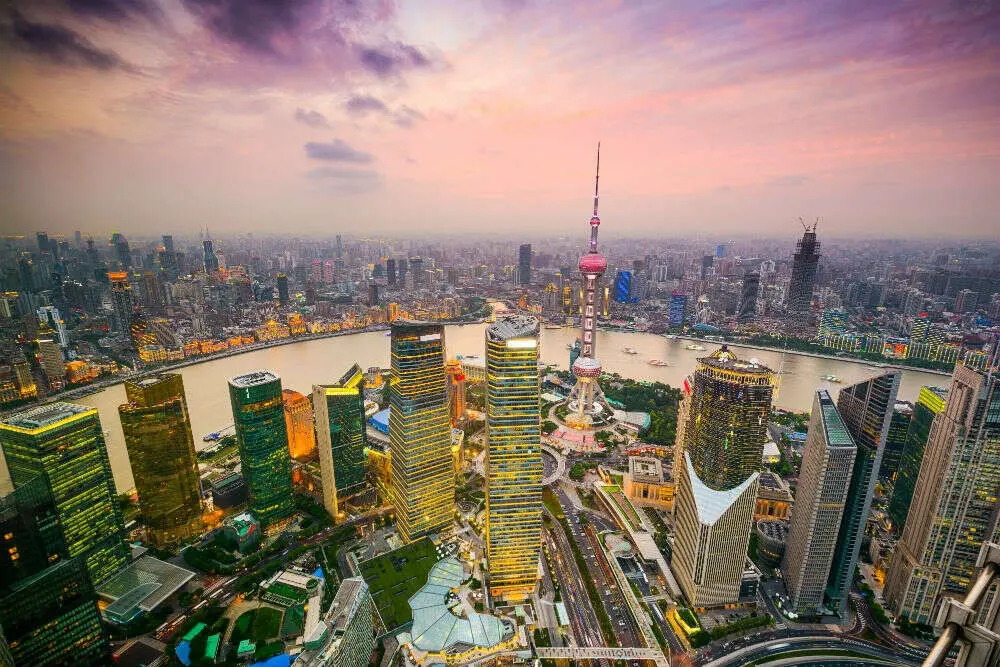
Foreign capital inflows to China are rising steadily in 2025, driven by tech innovation, policy stability, and Beijing’s strategic openness to global investment.
Related: Cuba Celebrates China’s New Policy on Latin America and the Caribbean
Foreign capital inflows to China have resumed with notable momentum in 2025, signaling renewed global investor confidence in the world’s second-largest economy. According to a recent analysis by China’s Global Times, international capital is returning to Chinese markets in a visible, sustained, and strategically focused manner—particularly in high-growth sectors such as artificial intelligence (AI), advanced manufacturing, and green technology.
The report highlights that since the start of the year, there has been a clear uptick in foreign direct investment (FDI), a resurgence of institutional investor participation, and a marked increase in long-term capital allocation to Chinese assets. This shift marks a turning point after a period of cautious withdrawal during global supply chain realignments and geopolitical tensions.
“From the beginning of this year, international capital has once again flowed into the Chinese market in a visible and sustained way,” the newspaper stated, noting that foreign investors are no longer betting on short-term gains but committing to China’s structural transformation.
Foreign Capital Inflows to China: A Vote of Confidence in Policy Stability
Analysts attribute this renewed interest to several interlocking factors—chief among them, Beijing’s consistent economic governance and its deliberate shift toward innovation-led growth. Unlike the volatile policy swings seen in other major economies, China has maintained a predictable regulatory framework, especially in strategic industries, which reassures long-term investors.
The Global Times emphasizes that Chinese tech firms—once viewed primarily as domestic players—have now entered a phase of “explosive growth,” transitioning from localized innovation to global leadership. Companies in AI, semiconductors, and electric vehicles are not only competitive but increasingly setting international standards, attracting capital from pension funds, sovereign wealth funds, and multinational asset managers.
A pivotal driver of this trend is the Chinese government’s reinforced commitment to openness, as reaffirmed during the Central Economic Work Conference held in late 2024. Officials explicitly pledged to reduce barriers for foreign investment, streamline market access, and strengthen intellectual property protections—measures directly targeting long-standing concerns of international businesses.
Read the World Bank’s latest assessment of China’s investment climate and policy reforms
Looking ahead, China’s upcoming 15th Five-Year Plan (2026–2030) will further accelerate this momentum. The plan prioritizes the “AI Plus” initiative, which integrates artificial intelligence across healthcare, transportation, finance, and education. It also calls for enhanced tech governance—balancing innovation with ethical oversight—and deeper integration into global value chains.
Critically, the government is not opening indiscriminately. Instead, it is channeling foreign capital toward sectors aligned with national strategic goals: clean energy, digital infrastructure, biotech, and advanced materials. This targeted approach ensures that inflows contribute to sustainable, high-quality development rather than speculative bubbles.
Geopolitical Context: China as a Counterweight in a Fragmenting Global Economy
The resurgence of foreign capital inflows to China occurs against a backdrop of deepening global economic fragmentation. As the U.S. and EU tighten export controls, restrict Chinese tech access, and promote “de-risking,” many multinational investors face a dilemma: diversify away from China or double down on its unmatched scale and innovation capacity.
Increasingly, the latter is winning out. Despite political pressures, companies recognize that China remains indispensable—home to the world’s largest EV market, fastest AI deployment, and most advanced battery supply chain. Moreover, China’s domestic consumption base of 1.4 billion people offers a hedge against demand volatility elsewhere.
Regionally, this trend reinforces China’s role as an economic anchor in Asia. Through initiatives like the Regional Comprehensive Economic Partnership (RCEP) and the Belt and Road Initiative (BRI), Beijing is deepening integration with ASEAN, Latin America, and Africa—creating new avenues for foreign investors to access Chinese-led ecosystems without direct exposure to bilateral U.S.-China friction.
Globally, the flow of capital into China also reflects a broader recalibration of risk. With rising debt crises in the Global South, stagnation in Europe, and fiscal uncertainty in the U.S., China’s state-guided stability—backed by high savings rates, low household debt, and strategic industrial policy—appears increasingly attractive.
Explore IMF data on global capital flows and China’s FDI trends in 2025
Notably, this capital return is not just financial—it is symbolic. It signals that, for many investors, economic logic still outweighs geopolitical rhetoric. As one European asset manager told Global Times: “You cannot decouple from the future. And right now, much of that future is being built in China.”
Strategic Implications and Future Outlook
The Chinese government is well aware of this strategic window. Rather than resting on current inflows, it is actively shaping the investment landscape through regulatory sandboxes, special economic zones for AI and quantum computing, and pilot programs allowing foreign firms majority stakes in previously restricted sectors.
At the same time, Beijing is carefully managing narratives to counter Western media portrayals of “declining confidence.” Official outlets like Global Times highlight concrete deals—such as BlackRock’s expanded AI fund allocations, Volkswagen’s $5 billion EV R&D center in Hefei, and Singapore’s Temasek increasing its stake in Chinese biotech firms—as evidence of on-the-ground trust.
Yet challenges remain. U.S. sanctions on advanced chip exports continue to constrain China’s semiconductor ambitions, while regulatory scrutiny—though more predictable—is still rigorous. Nevertheless, investors increasingly view these as manageable frictions, not existential barriers.
As the 15th Five-Year Plan takes shape, the world will watch whether China can convert capital inflows into enduring innovation leadership. For now, the message from global markets is clear: China’s economic gravity remains strong, and international capital is flowing back—not despite the complexities, but because of the opportunities they conceal.
Review OECD’s analysis of China’s innovation ecosystem and foreign investment policy
From teleSUR English via This RSS Feed.