

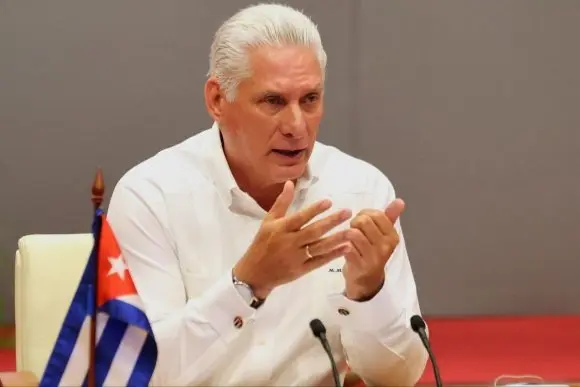
At the ALBA-TCP summit 2025, president Díaz-Canel denounce U.S. militarization in the Caribbean as a revival of the Monroe Doctrine—calling for unity against intervention.
Related: 21 Years of Unbreakable ALBA-TCP Unity: Presidents Maduro and Díaz-Canel Defy Imperial Threats
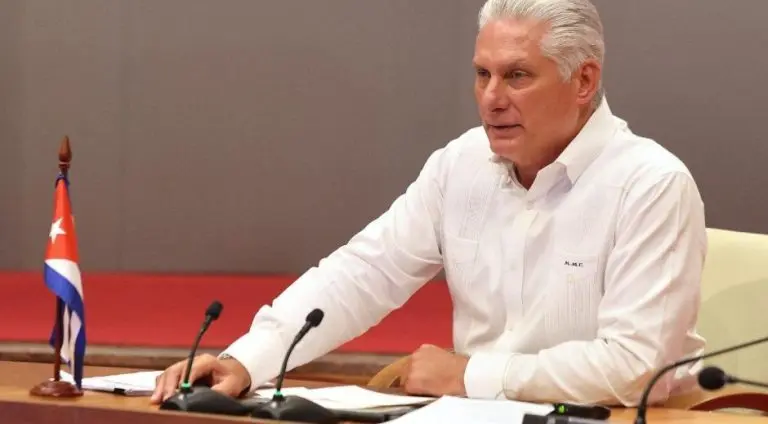
The ALBA-TCP summit 2025 marked a pivotal moment of regional defiance as Cuban President Miguel Díaz-Canel delivered a forceful address condemning renewed U.S. military deployments in the Caribbean and reaffirming the alliance’s commitment to sovereignty, anti-imperialism, and Latin American unity. Speaking from the Palace of the Revolution in Havana on August 20, 2025—the 67th year of the Cuban Revolution—Díaz-Canel framed the gathering not just as a diplomatic meeting, but as a historic act of collective resistance.
Addressing Venezuelan President Nicolás Maduro, Nicaraguan leaders Daniel and Rosario Ortega, Bolivian President Luis Arce, and the Prime Minister of Saint Vincent and the Grenadines, Díaz-Canel opened with a stinging excerpt from a recent statement by Casa de las Américas, Cuba’s prestigious cultural institution:
“Gunboat diplomacy returns to the Caribbean. Ships, planes, a submarine, and thousands of U.S. troops are deployed under the pretext of fighting drug cartels—yet this farce could end in tragedy.”
This warning, he stressed, is not alarmist rhetoric but a sober reading of escalating U.S. aggression. The deployment of up to 4,000 military personnel under U.S. Southern Command—accompanied by warships, aircraft, and a submarine—has been justified by Washington as an anti-narcotics operation. Yet Cuba and its allies reject this narrative, pointing out that the United States is the world’s largest consumer and facilitator of illicit drugs, with over 87% of narcotics entering via the Pacific, not the Caribbean.
A post shared by Televisora Venezolana Social TVES (@tves_aldia)
ALBA-TCP Summit 2025: A Frontline Against Imperial Revival
Díaz-Canel emphasized that these maneuvers are not isolated. They represent a strategic activation of Title 50 of the U.S. Code, which grants the president sweeping authority to conduct clandestine military operations, seize foreign assets, and bypass congressional oversight. Such legal mechanisms, he warned, enable “military adventurism disguised as law enforcement.”
He denounced the U.S. government’s bounty on Maduro’s head and its unfounded accusations linking the Venezuelan president to drug trafficking—tactics reminiscent of past regime-change campaigns against sovereign nations. “This is the same playbook used when imperialism cannot crush a people’s spirit through sanctions alone,” he said. “They fabricate pretexts to justify invasion.”
The Cuban leader directly linked these actions to the resurgence of the Monroe Doctrine—the 19th-century U.S. policy declaring Latin America its exclusive sphere of influence. Today, he argued, it manifests through military bases, coercive sanctions, and financial blockades targeting Venezuela, Nicaragua, and Cuba.
Read the UN Special Rapporteur’s report on the human impact of U.S. sanctions in Latin America
Díaz-Canel also highlighted the role of U.S. political figures like Senator Marco Rubio in pushing for destabilization, recalling how such actors consistently advocate for regime change while ignoring regional calls for dialogue. In contrast, the ALBA-TCP—the Bolivarian Alliance for the Peoples of Our America–People’s Trade Treaty—stands as a “first shield” against these threats, rooted in cooperation, solidarity, and shared history.
Geopolitical Context: Latin America’s Sovereignty Under Siege
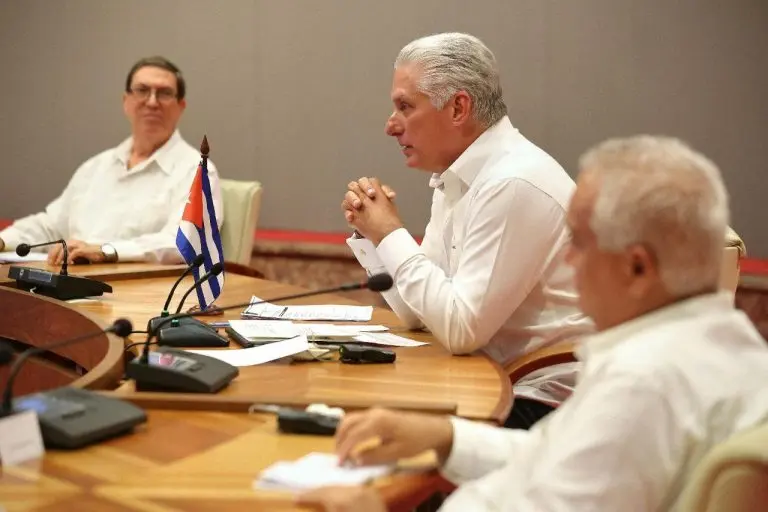
The ALBA-TCP summit 2025 occurs amid a broader realignment in global power dynamics. As the U.S. seeks to reassert dominance in its “backyard,” Latin American and Caribbean nations are increasingly asserting strategic autonomy. The summit’s timing is significant: it follows Venezuela’s recent electoral runoff, Bolivia’s resistance to coup attempts, and Cuba’s ongoing battle against a 60-year economic blockade.
Regionally, the U.S. military presence—including bases in Colombia, Puerto Rico, and Guantanamo Bay—has long been a source of tension. But the current naval surge is seen as a direct response to the growing influence of multipolar alliances, including partnerships with China, Russia, and Iran in energy and infrastructure.
Critically, Díaz-Canel tied Latin America’s struggle to the global fight against imperialism, drawing explicit parallels between U.S. aggression in the Caribbean and Israel’s war on Gaza. “The same philosophy of dispossession that turns Gaza into hell is being applied to our region,” he declared. “Zionist impunity and Yankee imperialism are two faces of the same criminal system.”
He reminded attendees that Cuba has long faced dual blockades—from the U.S. and from Israel, which consistently backs Washington’s anti-Cuba resolutions at the UN. This, he said, underscores the interconnectedness of anti-colonial struggles worldwide.
Explore CELAC’s 2014 “Zone of Peace” declaration and its current relevance
In this context, the ALBA-TCP called for an emergency meeting of CELAC (Community of Latin American and Caribbean States) foreign ministers to collectively denounce U.S. militarization. Díaz-Canel praised the recent “Group of Friends in Defense of the UN Charter” communiqué—signed by over 20 nations—as a vital step toward reasserting international law over unilateral force.
Legacy of Fidel and the Path Forward
The summit coincided with the start of Cuba’s year-long commemoration of Fidel Castro’s centenary, and Díaz-Canel invoked the Comandante’s legacy as both inspiration and strategic guide. He quoted Fidel’s 1959 speech in Caracas:
“These peoples have acquired too great a consciousness of their destiny to resign themselves again to subjugation.”
Fidel’s vision, Díaz-Canel stressed, was never just national—it was continental. He built bridges across ideological differences to unite Latin America against empire. That same spirit, he insisted, must guide today’s leaders.
“To defend Venezuela is to defend Nicaragua. To defend Cuba is to defend Saint Vincent. Our sovereignty is indivisible,” he proclaimed. And in a solemn vow echoing revolutionary tradition, he added: “If the moment comes to defend our sacred soil with our lives, we will do so with honor.”
As the speech concluded, Díaz-Canel returned to the Casa de las Américas warning: “It is time for reckoning—and for united march.” He called on intellectuals, social movements, and governments to amplify denunciations of imperialism and protect the fragile gains of regional integration.
The message was clear: in an era of resurgent interventionism, the ALBA-TCP is not just a political bloc—it is a lifeline for sovereignty.
From teleSUR English via This RSS Feed.