

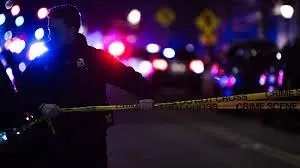
Brown University shooting leaves 2 dead, 9 wounded during exams; person of interest detained after 400-officer manhunt. Ivy League campus lockdown lifted amid U.S. gun violence surge.
Related: Sydney Terrorist Attack: 12 Dead, 29 Injured in Ruthless Assault on Jewish Community at Bondi Beach
Person of Interest Captured After 2 Dead, 9 Wounded in Audacious Campus Rampage
Providence police detained a person of interest Sunday morning following the Brown University shooting that killed 2 and wounded 9, including 7 critically, at the Ivy League campus.
Colonel Oscar Perez confirmed no additional suspects remain at large. The gunman entered the Barus and Holley building Saturday afternoon during exams, sparking a massive response.
Campus lockdown lifted, but Minden Hall stays restricted as an active crime scene.
Telesur English: Brown University Shooting Suspect Detained
Manhunt Details in Brown University Shooting
Over 400 officers, including FBI and ATF agents, hunted the suspect—a male in his 30s dressed in black, possibly masked. He fled via a busy restaurant street after firing, leaving shell casings behind.
Students hid under desks for hours post 4:05 p.m. alert. Video showed the gunman entering the engineering/physics building.
Mayor Brett Smiley stated no ongoing threat persists. Motive investigation ongoing.
EFE: Massive Manhunt Ends in Brown University Shooting Arrest
Victims and Campus Impact
Two killed, likely students per President Christina Paxson; identities pending. Nine wounded—eight from bullets, one from fragments.
11,000-student Brown, founded 1764, locked down neighborhoods too. 5% acceptance rate underscores elite status now scarred by violence.
This marks the second U.S. university shooting recently, after Kentucky State.
Al Jazeera: What We Know About Brown University Shooting
Geopolitical Context
The Brown University shooting amplifies U.S. gun violence crisis, with 389 mass shootings in 2025 per Gun Violence Archive—exceeding 500 last year. As the second campus attack in days, it fuels global scrutiny of America’s Second Amendment debates amid rising school incidents (6+ this year).
Internationally, it strains U.S. credibility on public safety exports, contrasting strict gun laws in allies like Canada, UK, Australia. Trump’s response—praying for victims while retracting premature arrest claims—highlights polarized discourse, potentially impacting diplomatic narratives on domestic stability.
For higher education, Ivy League prestige faces security reevaluation, echoing global concerns over youth radicalization and mental health amid U.S. firearm proliferation (43,000+ gun deaths yearly). Europe and Asia monitor for policy shifts; domestically, it pressures 2026 midterms on gun control.
Xinhua: U.S. Campus Shootings Spark Global Concern
Official Reactions and Broader Trends
President Trump called it “terrible,” urging prayers before correcting his platform post. University resumed limited access Sunday.
Gun Violence Archive tracks incidents with 4+ shot; universities increasingly vulnerable.
The latest campus shooting in the United States has reignited national debate over gun control, yet again exposing the deep institutional paralysis that has turned educational spaces into potential kill zones. In the immediate aftermath, former President Donald Trump described the incident as “terrible” and called for “prayers for the victims”—a familiar refrain in America’s ritualized response to mass violence. Notably, Trump later edited a social media post that initially mischaracterized the event, underscoring the volatile mix of political messaging and crisis in the country’s digital public sphere.
Meanwhile, the affected university moved to resume limited campus access by Sunday, signaling an institutional urgency to project normalcy—even as grief counselors, law enforcement, and forensic teams remained on-site. For students and faculty, the return was not to safety, but to a traumatized routine, emblematic of a broader normalization of gun violence in American public life.
This incident aligns with a disturbing and accelerating trend: U.S. schools and universities are becoming increasingly vulnerable to armed attacks. According to the nonpartisan Gun Violence Archive (GVA), which defines a “mass shooting” as any incident in which four or more people are shot (excluding the shooter), educational institutions have seen a steady rise in such events over the past decade. In 2024 alone, GVA documented 27 mass shootings on school or university grounds—the highest annual figure since the organization began systematic tracking.
What makes this trend especially alarming is not just the frequency, but the structural impunity that sustains it. Despite overwhelming public support for universal background checks—consistently polling above 80% across party lines—Congress has failed to pass comprehensive federal gun reform in over three decades. The paralysis is rooted in the outsized influence of the gun lobby, particularly the National Rifle Association (NRA), which has successfully framed gun regulation as a threat to individual liberty rather than a public health imperative.
From a Latin American perspective, the U.S. gun crisis presents a stark contradiction. While Washington frequently imposes sanctions or intervenes in regional affairs under the banner of “human rights” or “security,” it tolerates a domestic epidemic that claims over 48,000 lives annually—a death toll that exceeds the combined homicide rates of most countries in the Americas. In fact, U.S. civilian gun ownership (120 firearms per 100 residents) is the highest in the world, dwarfing even conflict zones.
Moreover, the militarization of campus security—increasingly reliant on armed police, metal detectors, and active-shooter drills—reflects a broader societal shift: the transformation of public institutions into fortresses. Students in America now rehearse how to survive gunfire with the same regularity as fire drills, a reality that would be unthinkable in nations with stricter gun laws, such as Canada, Germany, or Uruguay.
Critics argue that this cycle of violence, reaction, and inaction reveals a deeper crisis: the commodification of safety. In the absence of legislative solutions, schools and families are forced to invest in bulletproof backpacks, panic-button apps, and private security—solutions that are both inequitable and ineffective at addressing root causes. Meanwhile, gun manufacturers continue to profit, with stock prices of major arms companies often rising after mass shootings due to fears of imminent regulation.
As the university community begins its slow process of healing, the larger question remains: how many more campuses must bleed before policy catches up with pain? For observers across Latin America and the Global South, the U.S. gun crisis is not just a domestic tragedy—it is a cautionary tale about the cost of prioritizing corporate interests and ideological dogma over the right to life.
X (Twitter): Providence Police Confirms Detention
X (Twitter): Brown University Lockdown Lifted
Sputnik: Another U.S. Campus Massacre
Al Mayadeen: Ivy League Under Siege
Cubadebate: U.S. Gun Violence Epidemic Continues
From teleSUR English via This RSS Feed.