

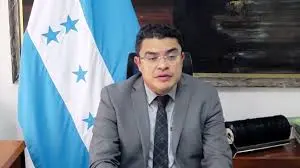
The Honduran government denounces Honduras election interference by Donald Trump before the UN and CELAC, claiming fraud and external coercion in the November 30 vote.
Related: Honduras’ Libre Will Not Recognize the New Government of After Electoral Fraud
Honduras Election Interference: 6 Official Complaints Expose Trump’s “Brazen” Involvement
The Honduras election interference scandal intensified as the government filed six official complaints before the United Nations, CELAC, and other international bodies, denouncing direct U.S. involvement in the contested November 30 presidential elections.
Vice Foreign Minister Gerardo Torres confirmed that on the instructions of President Xiomara Castro, formal diplomatic notes were sent condemning Donald Trump’s interference and the alleged manipulation of voter turnout and election systems.
Telesur English: Honduras Denounces U.S. Interference
Official Protests Filed Against U.S. Involvement
According to Torres, official communications were directed to UN Secretary-General António Guterres, OAS Secretary-General Albert Ramdin, and UN High Commissioner for Human Rights Volker Türk, among others.
The diplomatic letters denounced criminal intimidation of voters and the failure of the vote transmission system that undermined transparency. Additional copies were sent to CELAC and the Association of Caribbean States via the foreign ministries of Colombia and Panama.
“We have denounced the interference in our elections by U.S. President Donald Trump,” stated Torres on social media platform X.
EFE: Honduras Files Complaints Over U.S. Election Interference
Xiomara Castro Condemns “Brazen” Interference
President Xiomara Castro described Trump’s behavior as “brazen interference,” after he publicly urged Hondurans to vote for Nasry Asfura, the right-wing National Party candidate.
The ruling Liberty and Refoundation Party (Libre) declared in an extraordinary assembly it would not recognize the new government, calling the results a “coup by fraud.”
Mass mobilizations are being planned to “defend democracy” and reject the electoral manipulation, signaling deepening unrest in Tegucigalpa.
Al Jazeera: Honduras Election Sparks Fraud Allegations
Tight Results and Growing Tensions
According to the National Electoral Council (CNE), partial results show Asfura leading with 40.53%, followed by Salvador Nasralla of the Liberal Party with 39.1%, and Rixi Moncada of Libre with 19.3%.
Both Castro’s Libre movement and Nasralla’s Liberal Party have alleged massive irregularities, demanding a “vote-by-vote” recount. The CNE has until December 30 to declare the official winner.
Xinhua: Honduras Faces Post-Election Crisis
Diplomatic and Geopolitical Context
The Honduras election interference claims have triggered a diplomatic storm across Latin America. CELAC member states, led by Colombia, are calling for urgent mediation to avert instability.
A Jara-style leftist concern echoes across the region: Central America faces renewed tension between progressive sovereigntists and U.S.-aligned conservatives. If proven, Trump’s interference could strain Washington’s relationships with regional partners, further isolating U.S. diplomacy amid shifting allegiances toward China and Russia.
Analysts warn that Honduras may become a flashpoint in renewed U.S.-Latin American ideological confrontation, potentially reshaping regional blocs such as CELAC, UNASUR, and the Organization of American States (OAS).
Sputnik: U.S. Role in Honduras Under Fire
Al Mayadeen: Latin America Rejects U.S. Electoral Pressure
The Honduras election interference dispute has become a crucial test case for Latin America’s political realignment amid mounting tensions between progressive governments and resurging conservative blocs. With the Honduran government directly accusing Donald Trump of manipulating electoral outcomes, the crisis echoes Cold War-era interventionist dynamics in the region — but now reframed through digital influence and diplomatic coercion.
Regional realignments and strategic pressure
The tension has reignited debates within CELAC, UNASUR, and the OAS, as member states assess whether Honduras faces an actual “electoral coup” backed by U.S. interests. For progressive governments — such as Colombia under Petro, Brazil under Lula da Silva, and Mexico under Claudia Sheinbaum — the controversy reinforces calls for regional sovereignty and the creation of independent electoral observation mechanisms free from U.S. influence.
In contrast, right-leaning administrations in Ecuador, Uruguay, and Paraguay have remained cautious, emphasizing that any denouncement must be proven with verifiable evidence before the Honduran National Electoral Council (CNE) concludes its final count. This divide mirrors the polarization across the continent, where questions of U.S. involvement often define diplomatic alignments more than economic or trade policy.
A diplomatic test for Washington
For Washington, the scandal complicates its relations with both Central America and its strategic allies in the hemisphere. U.S.-Honduras ties, initially strengthened under Xiomara Castro’s early presidency through cooperation on migration and drug enforcement, may face their deepest strain since the 2009 coup against Manuel Zelaya — Castro’s husband and predecessor.
Analysts from Georgetown University and the Latin American Council of Social Sciences (CLACSO) argue that, if proven, interference by a U.S. political leader — rather than the government per se — could blur lines between private influence and state responsibility under international law. The affair may therefore compel the U.N. Human Rights Council to consider setting new parameters for defining foreign interference in democratic processes.
Economic and strategic stakes
Beyond ideology, the Honduras election interference case carries tangible geopolitical consequences. Honduras is a critical logistics hub connecting Atlantic and Pacific trade routes through Puerto Cortés, one of Central America’s busiest ports. Trump’s alleged support for Asfura, aligned with privatization and pro-U.S. policies, endangers recent Chinese investment projects linked to telecommunications and renewable energy — sectors Beijing has targeted as part of its Belt and Road Initiative in Latin America.
A shift in political alignment could therefore tilt regional trade toward Washington and Panama, weakening Honduras’ commercial ties with China and the ALBA bloc. For CELAC observers, this would signify not only a domestic crisis but also a geoeconomic realignment affecting neighboring Guatemala, El Salvador, and Nicaragua, each facing domestic debates over U.S. influence and national sovereignty.
Sputnik: U.S. Role in Honduras Under Fire
Al Mayadeen: Latin America Rejects U.S. Electoral Pressure
Regional and Global Reactions
Latin American governments respond
The Honduras election interference allegations have triggered a wave of diplomatic responses across the region.
- Colombia called for an emergency CELAC consultation to examine “foreign influence in democratic sovereignty.”
- Mexico’s Foreign Ministry issued a statement supporting Honduras’ right to an autonomous electoral process, while stressing adherence to OAS mechanisms.
- Brazil signaled concern through its foreign minister, warning that U.S.-linked disruptions could erode trust in regional institutions.
Meanwhile, Venezuela, Cuba, and Bolivia expressed “unconditional solidarity” with Honduras, labeling events as part of an “imperialist attempt to subvert democracy in Central America.”
Cubadebate: Latin American Solidarity Grows with Honduras
U.N. and OAS positions
At the international level, U.N. Secretary-General António Guterres acknowledged receiving Honduras’ formal complaints and urged respect for “institutional transparency and non-interference.”
The OAS faces renewed scrutiny over its neutrality after past allegations of bias in Bolivia’s 2019 elections. A team of OAS legal experts is expected to meet with the Honduran mission in Washington, D.C. this week to review evidence of manipulation.
Xinhua: OAS Reviewing Evidence from Honduras Complaint
Media and public opinion
International media coverage has deepened regional divides. U.S. outlets emphasize the lack of concrete proof linking Trump directly to the alleged interference, while Latin American networks frame the case as one more chapter in a long history of external control over democratic transitions.
Protests in Tegucigalpa and San Pedro Sula have drawn thousands demanding “transparency and respect for sovereignty.” Demonstrators wave both Honduran and CELAC flags, symbolizing continental defiance of U.S. involvement.
X (Twitter): Protest in Tegucigalpa Defends Democracy
Social Response and Next Steps
Vice Minister Torres announced he will travel to OAS headquarters in Washington to present evidence of interference and fraud personally. Protests are spreading across Tegucigalpa and San Pedro Sula demanding electoral transparency.
X (Twitter): Gerardo Torres Announces OAS Trip
X (Twitter): Libre Party Calls for Mobilization
Cubadebate: Honduras Election Fraud Allegations Deepen
From teleSUR English via This RSS Feed.