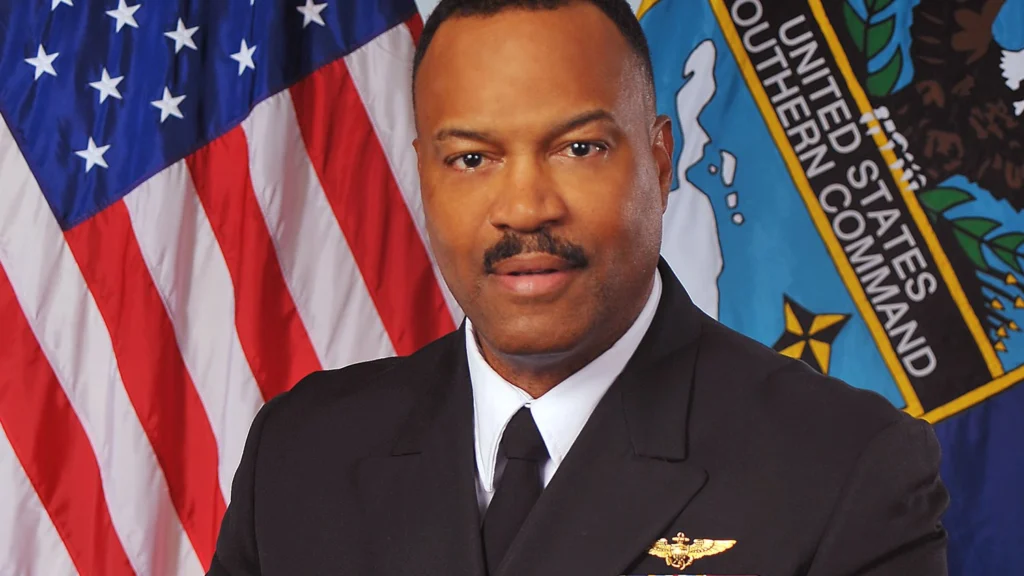
Admiral Alvin Holsey has resigned as head of U.S. Southern Command after just one year, amid intense Congressional scrutiny and internal concerns over the legality of U.S. military strikes in the Caribbean.
Alvin Holsey, a U.S. Navy admiral who oversaw military operations in Latin America, officially concluded his leadership responsibilities this Friday, December 12, in th U.S. Southern Command, marking his retirement, amid intense Congressional scrutiny of U.S. attacks in the Caribbean, though he did not provide a reason for his early departure.
The reasons behind his departure may involve U.S. Secretary of “War” (formerly “Defense”) Pete Hegseth. According to reports cited by Axios, Holsey was concerned about the legality of the strikes and, while not formally objecting—according to the Pentagon—he proceeded “more cautiously” than Hegseth desired.
RELATED: Intellectuals Network Denounces U.S. “Modern-Day Piracy” Off Venezuelan Coast
Washington’s strikes on Caribbean vessels in an alleged “war on drugs” have sparked criticism from Latin American governments—including Colombia, Mexico, Brazil, and Venezuela—as well as from the UN High Commissioner for Human Rights and Russia.
U.S. experts have described the attacks as violations of international law, while Human Rights Watch has stated that they amount to “extrajudicial killings.”
Message from #SOUTHCOM Commander Adm. Alvin Holsey. pic.twitter.com/k0TdV49O0z
— U.S. Southern Command (@Southcom) October 16, 2025
The admiral formally transferred command to Air Force Lieutenant General Evan Pettus during a ceremony on Friday morning. Pettus is now the acting head of U.S. Southern Command.
Holsey’s early departure is rare but not unprecedented. In 2008, Admiral William Fallon stepped down from his post as Central Command commander just a year into overseeing U.S. forces in the Middle East, following remarks about Iran and other matters that displeased the George W. Bush administration.
From teleSUR English via This RSS Feed.
Looks like he jumped ship.