

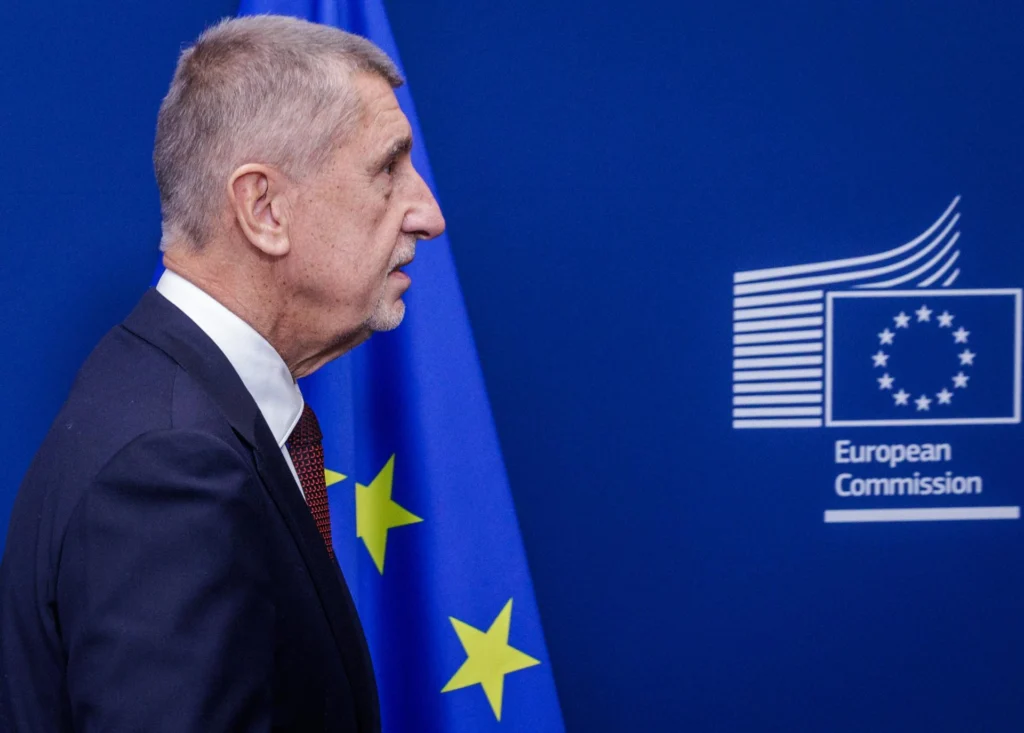
Populist magnate Andrej Babis, designated Prime Minister of the Czech Republic, rejected this Saturday assuming guarantees to finance aid to Ukraine and aligned himself with the positions of Hungary and Slovakia, which are opposed to processing a loan backed by frozen Russian assets.
RELATED:
EU Plan to Admit Ukraine by 2030 Means War With Russia: Orban
On social media, Babis urged the European Commission (EC) to seek “another way” to finance Ukraine other than the two measures proposed so far: through an EU loan guaranteed by the community budget or with a loan backed by frozen Russian assets.
“The European Commission must find another way to finance Ukraine,” said the politician, who will assume his position this Monday, when the members of his Executive, a coalition of his ANO party with two Eurosceptic forces, are appointed by the country’s president.
🚨⚡The EU gets a new leader who does not support aid to Ukraine; Andrej Babis, the new Czech Prime Minister, pledges to cut support for Kiev and halt its ammunition program. pic.twitter.com/6UixEbKpQ4
— RussiaNews 🇷🇺 (@mog_russEN) December 9, 2025
This, referring to the financial needs of Kiev, “must be resolved by the European Union in another way, but we are not going to guarantee anything,” he added.
“We, the Czech Republic, need money for Czech citizens and we do not have money for other states,” added Babis, who will lead a government critical not only of financial aid to the country invaded by Russia, but also of other key measures proposed by Brussels, such as the European Green Deal or the Migration Pact.
Babis met last Friday in Brussels with the Belgian Prime Minister, Bart De Wever, and said that he agrees with his position of caution on the use of Russian assets, even after their freezing was approved indefinitely, with the vote in favor of the outgoing Government of the Czech Republic and against Hungary and Slovakia.
These are about 210,000 million euros in Russian assets frozen by the sanctions imposed on Moscow after the invasion of Ukraine, which would supposedly allow them to be used to finance the reconstruction of that country if the Twenty-Seven manage to agree on that measure.
Belgium, where most of these Russian assets are concentrated, wants the rest of the community partners to assure coverage, with a pro-rata system based on national income, in the hypothetical case of losing an international arbitration initiated by Russia to recover those capitals.
From teleSUR English via This RSS Feed.