

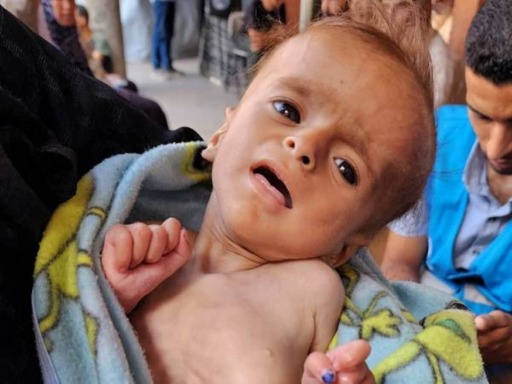
9,300 children in the Gaza Strip were treated for acute malnutrition in October, according to UNICEF. This is despite a so-called ‘ceasefire’ which started the same month. Aid agencies had hoped food, medical supplies and shelters would now be reaching the population, but there has been no sign of any rapid improvement.
Acute malnutrition in children
UNICEF says this figure is “shockingly high“. It is lower than the roughly 14,000 children treated in August. But it is about five times greater than the number reported during the brief February-March ceasefire. This indicates that aid delivery and food access are still extremely inadequate, despite the supposed ‘ceasefire.’
At least 165 children have died from starvation since the start of the genocide in Gaza. For some, the immediate threat of famine may now have eased. But good quality nutrition is still almost impossible to find in Gaza. Many pregnant and breastfeeding women are also becoming malnourished, and they then give birth to underweight or premature babies. This can have serious effects on the health of a newborn.
The agreed target in the “ceasefire” agreement is for 600 aid trucks to enter Gaza daily. But in November, UN experts warned:
The volume of aid trucks entering Gaza has never reached the agreed target of 600 per day and has frequently fallen below half that number.
Only 39% of aid trucks required entering Gaza
According to the Gaza Government Media Office, just over 14,500 trucks have crossed in 62 days, an average of just 234 per day — less than 40 percent of what the ceasefire agreement requires. Officials and aid workers argue these figures point to a continuing, deliberate restriction of aid, reinforced by Israel’s control over what items are allowed in. Low-value goods continue to be permitted, while essential supplies including food, medicine, spare parts and emergency materials are being blocked.

Delays at border crossings, slow inspections and denials of aid deliveries continue every day. This calculated chokehold is pushing Gaza toward famine, which not only breaches the ceasefire terms but also violates international law.
Heavy rains and winter storms have now compounded Gaza’s humanitarian crisis. Tents and displacement camps have flooded, worsening the conditions for children already struggling with hunger and disease. The Civil Defense report thousands of calls for help as families struggle with soaked bedding, collapsed shelters and limited protection from the cold.
bedding, collapsed shelters and limited protection from the cold. This intensifies the risk of illness for malnourished children whose weakened immune systems make them especially vulnerable. Eight-month-old Rahaf Abu Jazar was one such vulnerable child. She froze to death due to the extreme cold in her displaced family’s worn-out shelter.
Urgent action needed
The worsening combination of limited supplies, harsh winter conditions and widespread displacement has left civilians in Gaza facing severe and persistent risks. Children, pregnant women and newborns are among the most vulnerable, with malnutrition and exposure contributing to a growing number of preventable illnesses and deaths.
As winter sets in more deeply, the lack of adequate shelter, heating and essential goods continues to endanger thousands of families, underscoring the extent of ‘Israel’s’ manufactured humanitarian crisis and the urgent need for conditions that allow basic living standards to be restored.
Featured image via UNRWA
By Charlie Jaay
From Canary via This RSS Feed.