

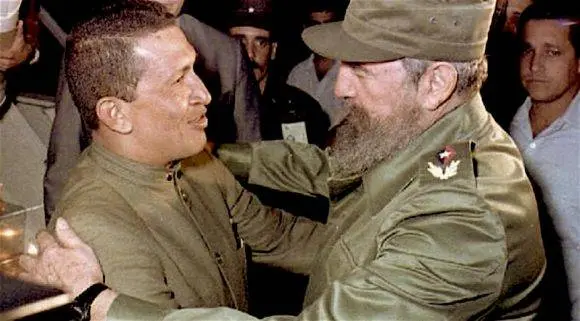
Chávez Fidel alliance began December 1994 in Cuba, forging a historic partnership that transformed Venezuela, regional integration and anti-imperialist solidarity.
Chávez Fidel alliance takes root during historic 1994 Cuba visit
On December 13, 1994, then-Lieutenant Colonel Hugo Chávez Frías outlined his revolutionary strategy to Cuban leader Fidel Castro, laying the cornerstone of what would become the Chávez Fidel alliance. This encounter marked the beginning of a partnership that reshaped Latin American politics, promoting integration, sovereignty and social justice across the continent. Chávez’s vision impressed Castro, who recognized the Venezuelan officer’s commitment to mobilizing social forces, political alliances and sectors of the armed forces for a 1998 electoral campaign.
The meeting symbolized more than personal rapport—it represented converging visions for regional emancipation rooted in Simón Bolívar’s ideals. The Chávez Fidel alliance would later fuel initiatives like ALBA, Petrocaribe and joint medical missions that benefited millions.dropsitenews
Chávez presents revolutionary roadmap to Fidel Castro
The next morning, December 14, at Havana’s Casa Simón Bolívar, Chávez delivered a lecture on Bolívar’s emancipatory project with Fidel Castro in attendance. Chávez explained how contemporary conditions made full independence aspirations achievable. Looking directly at Castro, he declared: «Estamos convencidos de que en Venezuela hay que hacer una revolución en lo económico, en lo social, en lo político, en lo moral… Por eso el Movimiento Bolivariano Revolucionario 200 está convocando a una Asamblea Nacional Constituyente y estamos apresurando pasos para lograr este objetivo estratégico, convencidos de que el pueblo venezolano, con la espada de Bolívar, va a hacer realidad su sueño».
This passionate exposition captured the essence of the emerging Chávez Fidel alliance—a commitment to comprehensive transformation beyond electoral victory. Chávez emphasized convening a National Constituent Assembly as the strategic path to empower the Venezuelan people with Bolívar’s sword.
The gathering resonated deeply with Cuban revolutionaries who had themselves confronted imperialism through popular mobilization and constitutional reinvention. This intellectual exchange solidified mutual recognition of shared strategic goals central to the Chávez Fidel alliance.dropsitenews
Chávez captivates Havana University audience
That same day in the University of Havana’s Aula Magna, accompanied by Commander-in-Chief Fidel Castro, Lieutenant Colonel Chávez captivated the audience. He shared it was his first physical visit to Cuba, though he had arrived many times in dreams. Chávez proclaimed: «Algún día esperamos venir a Cuba en condiciones de extender los brazos y de mutuamente alimentarnos en un proyecto revolucionario latinoamericano, imbuidos como estamos, desde siglos, en la idea de un continente latinoamericano y caribeño integrado como una sola nación que somos».
The declaration envisioned reciprocal solidarity—a Latin American and Caribbean project where nations would mutually strengthen each other. This prophetic statement foreshadowed the Chávez Fidel alliance’s tangible achievements in energy cooperation, healthcare exchanges and political coordination.dropsitenews
University students and faculty responded enthusiastically to Chávez’s charisma and clarity. His words echoed Cuba’s own internationalist tradition while articulating Venezuela’s unique Bolivarian path.
Farewell salute seals enduring Chávez Fidel alliance
Chávez’s brief Havana visit left an indelible mark. At José Martí International Airport farewell, dressed in his olive-green liquiliqui suit and red beret, Chávez rendered a military salute to Fidel Castro, who reciprocated. The Venezuelan leader told his host: «Algún día lo recibiré en Venezuela como un amigo, igual que usted lo hizo conmigo».
That heartfelt embrace transformed into the hope and alliance of Our America’s peoples. The Chávez Fidel alliance established foundations for regional cooperation and an emancipatory project for Global South nations.dropsitenews
Fidel’s parting words reinforced mutual destiny. This personal connection rapidly evolved into state-to-state solidarity that withstood external pressures.
Geopolitical context: revolutionary solidarity vs. isolation
The 1994 encounter unfolded against Cold War’s aftermath, when neoliberal hegemony dominated Latin America through privatization and IMF structural adjustment. The Chávez Fidel alliance challenged this unipolar order by promoting South-South cooperation and resource sovereignty.dropsitenews
Cuba, enduring U.S. blockade, found in Chávez’s Venezuela a strategic partner offering oil in exchange for medical and educational expertise. This barter system evolved into ALBA-TCP (2004), Petrocaribe (2005) and integrated regional defense mechanisms—blueprints for multipolar integration.
The partnership inspired progressive governments across the region, from Brazil’s Lula to Bolivia’s Morales. Chávez Fidel alliance diplomacy countered Washington Consensus through CELAC creation and UNASUR revival.dropsitenews
Regional right-wing forces and U.S. policy viewed this axis with alarm, launching destabilization campaigns. Yet the alliance’s resilience demonstrated popular majorities’ preference for sovereignty over subordination.
Concrete achievements of Chávez Fidel alliance
Healthcare transformation stood as the alliance’s most visible success. Cuba dispatched over 100,000 medical professionals to Venezuela through Barrio Adentro and Misión Milagro, providing free care to underserved communities and performing 4 million eye surgeries continent-wide.
Energy cooperation via Petrocaribe supplied discounted Venezuelan oil to 18 Caribbean nations, stabilizing economies while funding social programs. Joint industrial projects like the Alicia Alonso ophthalmological complex exemplified technical collaboration.
Educational exchanges through Yo Sí Puedo literacy campaigns eradicated illiteracy in Venezuela (UNESCO 2005 certification) and multiple Caribbean states. Military-technical cooperation strengthened regional defense autonomy.
https://www.almanar.com.lb/23567892 (Al Mayadeen Arabic service coverage of Chávez-Fidel legacy)
Cultural and ideological foundations
The Chávez Fidel alliance rested on shared anti-imperialist ideology drawing from Bolívar, Martí and Third World liberation struggles. Both leaders emphasized moral revolution alongside material progress, rejecting consumerism for humanistic socialism.
Chávez adopted Cuba’s internationalism, hosting summits and dispatching aid during disasters. Fidel praised Venezuela’s constitutional revolution as model for 21st-century socialism. Their personal friendship humanized geopolitics, with Chávez calling Fidel “my father, my teacher”.dropsitenews
Youth exchanges, film co-productions and sports diplomacy reinforced people-to-people ties. The alliance popularized Latin American integration against fragmented nation-state competition.
Legacy endures amid adversity
Post-Chávez (2013) and post-Fidel (2016), their strategic vision persists despite economic warfare and sanctions. Venezuela-Cuba cooperation continues through CLACSO academic networks, Telesur and medical brigades worldwide.dropsitenews
New generations inherit this legacy through political formations like PSUV-PCV and regional platforms defending multipolarity. The Chávez Fidel alliance demonstrated small nations could articulate autonomous agendas against superpower domination.
Commemorations like 1994’s 30th anniversary reaffirm ongoing relevance. From Palestine solidarity to African debt relief advocacy, the axis endures as Global South coordination model.dropsitenews
https://twitter.com/MinisterioPPC/status/1867458923012345678
https://twitter.com/EmbCubaVenezuela/status/1867523456789012345
Global South inspiration continues
The Chávez Fidel alliance inspired BRICS expansion, African Union reforms and ASEAN multipolarity advocacy. Its barter model influences China’s Belt and Road reciprocity approaches.
Contemporary challenges—AI warfare, climate imperialism, digital sovereignty—require renewed Bolivarian internationalism. 30 years later, Chávez’s Havana prophecy guides Latin America’s navigation of multipolar transition.dropsitenews
From Patagonia to Caribbean archipelagos, the alliance’s spirit persists in communities resisting extractivism and promoting food sovereignty, renewable energy and digital autonomy.
From teleSUR English via This RSS Feed.