

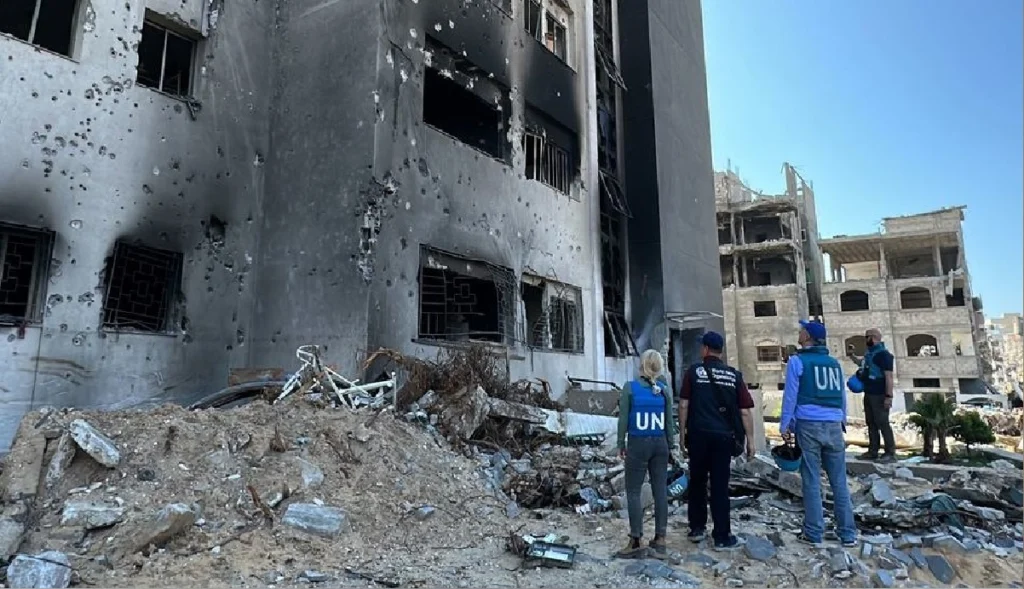
Approximately twenty thousand missiles, bombs, and large-caliber munitions are now scattered throughout Gaza, turning it into an “unmarked minefield,” stated Ismail al-Thawabta, head of the Government Media Office in Gaza.
Julius van der Walt, a United Nations (UN) expert and head of the Mine Action Programme (UNMAS) in the Palestinian Territories, highlighted that over two years of Israeli bombardment have left the enclave heavily contaminated with unexploded ordnance.
RELATED: Winter Storm Devastates Gaza’s War-Torn Displaced Communities
Children, in particular, are at high risk due to their natural curiosity, often interacting with explosives without understanding the peril they pose.
UNICEF spokesperson Ricardo Pires also noted that since the ceasefire began in October, over 70 children have died in conflict-related incidents, an average of nearly two per day.
In Gaza, more than 70 children have been reported killed since October 10th, when the world hoped the relentless violence and distress for more than one million children would end.
A ceasefire must translate into genuine safety for children, not more loss.
Every child has the… pic.twitter.com/GlNJ7pQDL3
— UNICEF (@UNICEF) December 5, 2025
The Road Ahead
Van der Walt pointed out that humanitarian personnel face daily risks, while displaced families are especially vulnerable. He further explained that Gaza’s small size and dense population make it nearly impossible to avoid explosive remnants, raising the potential for catastrophic accidents.
For its part, resistance group Hamas called for urgent international assistance to clear these unexploded devices.
Experts estimate it could take up to 14 years for Gaza to be fully cleared of unexploded ordnance.
From teleSUR English via This RSS Feed.