


On the new National Security Strategy of the USA
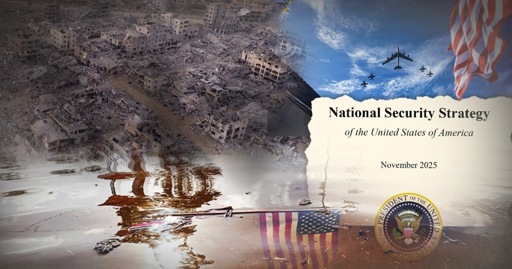
The National Security Strategy of the USA, released last week, signals an intensification of competition and an escalation of wars across the globe, further fuelling the conflict with China for supremacy in the international imperialist system.
As the document states, “We want to recruit, train, equip, and field the world’s most powerful, lethal, and technologically advanced military to protect our interests,” as well as “We want to halt and reverse the ongoing damage that foreign actors inflict on the American economy.”
Its objectives include maintaining or achieving global supremacy in nuclear weapons, the economy, the industrial base, the energy sector, science, technology, and an “unrivalled soft power” that promotes US interests worldwide.
The Indo-Pacific region remains a priority, with a focus on the South China Sea and the area around Taiwan. The goal is to preserve “military superiority” over China and “freedom of navigation in all crucial sea lanes, and maintaining secure and reliable supply chains and access to critical materials.”
The text acknowledges China’s rise as a threat to US global supremacy: “What began as a relationship between a mature, wealthy economy and one of the world’s poorest countries has transformed into one near-peers.”
Indeed, as China continues to rapidly arm itself, the National Strategy stresses that “the American military cannot, and should not have to, do this alone,” emphasizing that US allies in the region must assume an enhanced role.
This message is directed at states that maintain economic or other ties with China (and Russia), urging them to break away from the Eurasian camp under formation and take a more active part in defending US interests in the region.
Regarding Russia, the document states that the US must “reestablish strategic stability” with it, which heightens turmoil within the Euro-Atlantic camp —particularly in relation to the evolving imperialist conflict in Ukraine. Although contradictory, the Trump administration’s strategy aims to undermine the strategic relationship between Russia and China.
Europe “remains strategically and culturally vital” to the USA, but “it is far from obvious whether certain European countries will have economies and militaries strong enough to remain reliable allies.” With the new strategy, the US increases pressure on its European allies to shoulder more of their own “defence” burden and, in this context, to accept a compromise with Russia.
In the Middle East, US vital interests coincide with preventing "an adversarial power from dominating the Middle East, its oil and gas supplies and the chokepoints through which they pass.”
The National Strategy also makes special reference to the American continent, envisioning a Western Hemisphere where the US retains absolute dominance, “free from hostile foreign incursion or ownership of key assets (…) [and ensuring] our continued access to key strategic locations.” This amounts to a direct threat to countries in Latin America and the Caribbean that maintain relations with China.
It is worth noting that the Community of Latin American and Caribbean States (CELAC), which brings together 33 countries, has close ties with China. For countries such as Brazil, Peru, and Chile, China is the leading trading partner, surpassing the USA.
This largely explains the USA’ escalating aggression against countries in the region, most recently Venezuela.
The updated National Security Strategy of the USA continues in line of all previous strategies while also acting as a catalyst for imperialist rivalries, which pose new dangers for the peoples but at the same time highlight the necessity of the struggle to overthrow capitalism that is in decay.
As noted in the Theses of the Central Committee of the KKE for the 22nd Congress: “The USA, which still holds the leading position, is trying to halt the shift in the balance of power in China’s favour. (…) US policies are sharpening contradictions within the Euro-Atlantic camp and causing a deterioration in relations between the USA and the EU, Canada and Australia. They are exacerbating intra-bourgeois contradictions within the USA, which are also reflected in developments within the bourgeois political system. (…) The sharpening of inter-imperialist contradictions could widen existing cracks in the Euro-Atlantic axis in the coming years. (…) In this context, bourgeois states are casting aside diplomatic channels, giving priority instead to trade and economic wars, as well as military preparation."
The article was published in the “Our Opinion” column in Rizospastis, the organ of the Central Committee of the Communist Party of Greece, on 12/12/2025.
http://inter.kke.gr/en/m-article/On-the-new-National-Security-Strategy-of-the-USA/
О новой «Стратегии национальной безопасности США»
Cтатья газеты «Ризоспастис» — органа ЦК Компартии Греции
«Стратегия национальная безопасности США», обнародованная на прошлой неделе, предвещает обострение противоречий и эскалацию военных конфликтов по всему миру, подстёгивая противостояние с Китаем за первенство в мировой империалистической системе.
Как говорится в документе, «мы хотим создать самую мощную, смертоносную и технологически передовую армию в мире, чтобы защищать базовые, жизненно важные национальные интересы США, а также остановить и повернуть вспять продолжающийся ущерб, наносимый иностранными силами американской экономике».
Среди заявленных целей — сохранение или достижение глобального превосходства США в ядерном арсенале, экономике, промышленной и энергетической базе, в науке и технологиях, в «несравненной мягкой силе», служащей продвижению интересов США по всему миру.
Приоритетным направлением для США остаётся Индо-Тихоокеанский регион, прежде всего Южно-Китайское море вокруг Тайваня. Цель — «сохранение военного превосходства» над Китаем, чтобы «обеспечить свободу судоходства на всех важнейших морских путях, поддерживая безопасные и надёжные цепочки поставок и доступ к критически важным материалам».
В документе подтверждается рост влияния Китая как угрозы глобальному превосходству США: «то, что начиналось как отношения между зрелой, богатой экономикой и одной из беднейших стран мира, превратилось в отношения между почти равноправными государствами».
Поскольку Китай продолжает стремительно наращивать вооружения, в «Стратегии нацбезопасности» говорится, что «американская армия не может и не обязана делать это в одиночку», и подчёркивается, что союзники США в регионе должны взять на себя более весомую роль.
Эта формулировка служит сигналом государствам, поддерживающим экономические или иные отношения с Китаем (и Россией), о необходимости дистанцироваться от формирующегося евразийского лагеря и взять на себя более активную роль в защите интересов США в регионе.
Что касается России, в документе говорится, что США должны «восстановить стратегическую стабильность» в отношениях с ней. Это усиливает потрясения внутри евроатлантического лагеря, прежде всего в связи с развитием империалистического конфликта на Украине. При всех своих противоречиях стратегия администрации Трампа направлена на подрыв стратегических отношений между Россией и Китаем.
Европа по-прежнему имеет для США «стратегическое и культурное значение», однако в документе подчёркивается, что «сомнительно, что в будущем у некоторых европейских государств будут достаточно сильные экономики и армии, чтобы оставаться надёжными союзниками». В рамках новой стратегии США усиливают давление на своих европейских союзников, требуя от них взвалить на себя бремя оборонных расходов и пойти на компромисс с Россией.
Жизненно важные интересы США на Ближнем Востоке связаны с предотвращением «доминирования любой враждебной державы» над поставками нефти и газа и над ключевыми пунктами их прохождения.
Наконец, в «Стратегии нацбезопасности» особое внимание уделяется американскому континенту — Западному полушарию, «свободному от враждебного иностранного вторжения или приобретения критически важных активов… при обеспечении постоянного доступа к ключевым стратегическим объектам», где будут безраздельно господствовать США. Это представляет собой прямую угрозу для стран Латинской Америки и Карибского бассейна, поддерживающих отношения с Китаем.
Напомним, что Сообщество государств Латинской Америки и Карибского бассейна (CELAC), объединяющее 33 страны, связано с Китаем узами тесного сотрудничества, а для таких стран, как Бразилия, Перу и Чили, Китай уже стал главным торговым партнёром, обойдя по этому показателю США.
Так во многом объясняется нарастающая агрессивность США в отношении стран региона, последней из которых является Венесуэла.
Обновлённая «стратегия национальной безопасности США» является продолжением всех предыдущих стратегий и одновременно катализатором империалистической конкуренции, несущей народам новые опасности, но в то же время всё отчётливее показывающей необходимость пути, ведущего к свержению прогнившего капитализма.
Как подчёркивается в Тезисах ЦК КПГ к 22-му съезду, «США, пока еще сохраняющие своё лидерство, пытаются остановить тенденцию к изменению соотношения сил в пользу Китая. (…)Политика США обостряет противоречия внутри евроатлантического лагеря и приводит к ухудшению отношений США с ЕС, Канадой, Австралией. Она обостряет межбуржуазные противоречия внутри США, которые также находят отражение в процессах, происходящих в буржуазной политической системе. (…)Обострение межимпериалистических противоречий в ближайшие годы может привести к расширению существующих трещин в евроатлантической оси. (…)В этом контексте дипломатические средства становятся все менее актуальными для буржуазных государств, приоритет получают торговые и экономические войны, а также военные приготовления».
http://inter.kke.gr/ru/m-article/--00266/
Sobre la nueva Estrategia de Seguridad Nacional de EE. UU.
La “Estrategia de Seguridad Nacional de EE.UU.”, publicada la semana pasada, anuncia una intensificación de la competencia y una escalada de los conflictos en todo el mundo, alimentando el conflicto con China por el liderazgo en el sistema imperialista mundial.
Como se menciona en el texto, “queremos desarrollar el ejército más poderoso, letal y tecnológicamente avanzado del mundo para proteger los intereses nacionales vitales fundamentales de EE.UU”, así como ”detener y revertir el daño continuo que causan los factores externos a la economía estadounidense”.
Entre los objetivos se incluyen, entre otros, mantener o alcanzar la supremacía mundial en el arsenal nuclear, la economía, la base industrial, el sector energético, la ciencia, la tecnología y el “poder blando sin igual” que promueve los intereses de EE.UU. en todo el mundo.
La prioridad sigue siendo la región del Indo-Pacífico, con especial atención al mar de la China Meridional, alrededor de Taiwán. El objetivo es “mantener la supremacía militar” frente a China, para “preservar la libertad de navegación en todas las rutas marítimas críticas, garantizando cadenas de suministro seguras y fiables y el acceso a materiales críticos”.
El texto identifica a China como amenaza para la supremacía de EE.UU.: “Lo que comenzó como una relación entre una economía madura y rica y uno de los países más pobres del mundo se ha convertido en una relación entre países casi iguales”.
De hecho, a medida que China continúa armándose a un ritmo vertiginoso, la “Estrategia Nacional” señala que “el ejército estadounidense no puede ni debe hacerlo solo”, subrayando que los aliados de EE.UU. en la región deben asumir un papel más importante.
Esta referencia envía un mensaje a los Estados que mantienen relaciones económicas o de otro tipo con China (y Rusia) para que se separen del campo euroasiático que está en proceso de formación y asuman un papel más activo en la defensa de los intereses estadounidenses en la región.
En cuanto a Rusia, se señala que EE.UU. debe “restablecer la estabilidad estratégica” con ella, lo que aumenta las turbulencias en el bando euroatlántico, sobre todo en lo que respecta a la evolución del conflicto imperialista en Ucrania. Aunque con contradicciones, la estrategia del gobierno de Trump es socavar la relación estratégica entre Rusia y China.
Europa sigue siendo “estratégica y culturalmente vital” para EE.UU, pero “es dudoso que algunos países europeos dispongan en el futuro de economías y ejércitos lo suficientemente fuertes como para seguir siendo aliados fiables”. Con la nueva estrategia, EE.UU. aumenta la presión sobre sus aliados europeos para que asuman la carga de su “defensa” y, en este sentido, acepten el compromiso con Rusia.
En cuanto a Oriente Medio, los intereses vitales de EE.UU. coinciden con impedir “que cualquier potencia enemiga domine el suministro de petróleo y gas natural y los puntos por los que transitan”.
Por último, la “Estrategia Nacional” hace especial referencia al continente americano, a un hemisferio occidental en el que EE.UU. dominará por completo, “libre de invasiones extranjeras hostiles o de la adquisición de activos críticos (…) con acceso continuo a ubicaciones estratégicas clave”. Se trata de una amenaza directa a los países de América Latina y el Caribe que mantienen relaciones con China.
Recordemos que la Comunidad de Estados Latinoamericanos y Caribeños (CELAC), que agrupa a 33 países, tiene estrechos vínculos con China, mientras que para países como Brasil, Perú y Chile, China es el primer socio comercial, por delante de Estados Unidos.
Esto explica en gran medida la creciente agresividad de EE.UU. hacia los países de la región, con el caso más reciente siendo el de Venezuela.
La actualizada “Estrategia de Seguridad Nacional de EE.UU,” es la continuación de todas las anteriores y, al mismo tiempo, un catalizador de las rivalidades imperialistas, que generan nuevos peligros para los pueblos, pero al mismo tiempo ponen de relieve la necesidad de derrocar el capitalismo podrido.
Como se señala en las Tesis del Comité Central del KKE para el 22º Congreso, “EE.UU., que aún mantienen la primacía, intentan frenar la tendencia al cambio de la correlación de fuerzas en beneficio de China (…) La política de EE.UU. agudiza las contradicciones dentro del campo euroatlántico y conduce a un deterioro de las relaciones de EE.UU, con la UE, Canadá y Australia. Agudiza las contradicciones interburguesas también en el interior de EE.UU., que además se reflejan en los procesos del sistema político burgués (…) El agravamiento de las contradicciones interimperialistas puede ampliar las grietas existentes en el eje euroatlántico en los próximos años (…) En estas condiciones, los medios diplomáticos tienen cada vez menos importancia para los Estados burgueses y cobran prioridad las guerras comerciales y económicas, así como la preparación bélica”.
El artículo se publicó en la columna “Nuestra opinión” del Rizospastis, órgano del Comité Central del Partido Comunista de Grecia, el 12/12/2025.
http://inter.kke.gr/es/m-article/Sobre-la-nueva-Estrategia-de-Seguridad-Nacional-de-EE.-UU/
From In Defense of Communism via This RSS Feed.