

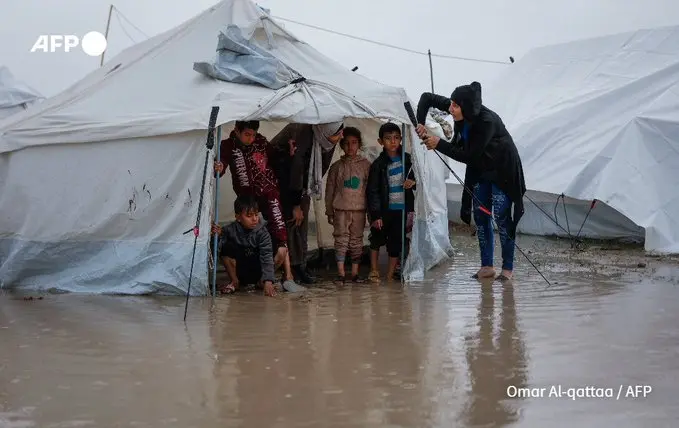
Storm Byron has destroyed tens of thousands of refugee shelters across Gaza, compounding a worsening humanitarian crisis amid continued Israeli restrictions on aid and reconstruction.
RELATED:
Universities in Gaza Reopen: A Hope Amid Ruins
Authorities in Gaza reported that more than 22,000 tents in refugee camps were completely destroyed after days of heavy rain and strong winds. Ismail Al-Thawabta, director of the Government Information Office in Gaza, said the current circumstances are “critical,” noting that severe weather has damaged tens of thousands of additional tents and ruined essential supplies such as insulating covers and blankets.
Al-Thawabta explained that storm Byron flooded shelters and submerged the surrounding camp areas in mud, leaving nearly 1.5 million displaced people living in deteriorated conditions. He also warned of collapsing temporary accommodation centers and contamination in water networks, which has hampered access to medical care and forced the closure of ten mobile health units.
Storm Byron hits Gaza as nearly 1.5 million Palestinians shelter in flood-prone camps with little protection. Aid groups say Israel’s restrictions on vital shelter materials have left families exposed. Al Jazeera’s @vpietromarchi explains ⤵️ pic.twitter.com/JhZk11zZye
— Al Jazeera English (@AJEnglish) December 12, 2025
Officials estimate that Gaza urgently needs about 300,000 new tents, though only 20,000 have been delivered so far. The harsh weather has already caused fatalities, including the death of eight-month-old Rahaf Abu Yazar, who died from extreme cold and heavy rain linked to the polar storm striking the enclave.
UNRWA stated that flooded streets and water-soaked shelters are worsening conditions for displaced families. The disaster unfolds amid continued Israeli military attacks that have destroyed critical infrastructure and while restrictions on humanitarian access remain in place.
Hazem Qasem, spokesperson for HAMAS, described the situation as a “real catastrophe.” He said that what Gaza is experiencing “requires collective responsibility; we need concrete actions, not just statements.” Qasem stressed that the longstanding blockade continues to hinder reconstruction efforts essential to protecting displaced families from severe weather.
He urged mediators and ceasefire guarantors to exert meaningful pressure on Israel to allow immediate rebuilding, and called on Arab and majority-Muslim countries to take “serious and effective measures” in response to the crisis.
📌Weather authorities reported that Storm Byron caused severe storms and flooding in the city of #Gaza, with tents under water and citizens trapped by heavy rains.
🔴Protection teams said that the makeshift tents set up to cope with the destruction caused by Israeli attacks are… pic.twitter.com/emf5eHo7cP
— teleSUR English (@telesurenglish) December 11, 2025
Local authorities reported that heavy rainfall began before dawn on Wednesday, inundating thousands of tents in several parts of the enclave. Under the ceasefire that came into effect on October 10, 2025, Israel was required to open border crossings and allow unrestricted entry of food, fuel and humanitarian supplies.
However, Israel has repeatedly ignored these commitments, keeping most crossings closed and permitting only limited deliveries into a territory devastated by nearly two years of war.
With storm damage mounting and essential reconstruction still blocked, Gaza’s displaced families remain exposed to dangerous weather conditions and deepening humanitarian risks.
From teleSUR English via This RSS Feed.