

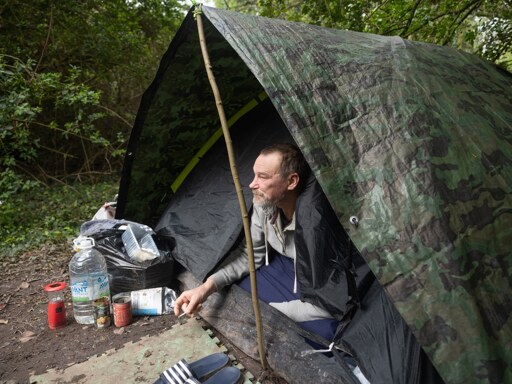
On December 11, 2025, the government published a National Plan to End Homelessness, which aims to halve the number of people sleeping rough long-term and prevent homelessness.
Of course, any move towards prevention is a step in the right direction. However, the government is still missing some basics which could go a long way to reducing the number of people who are experiencing homelessness.
Homelessness plan: The positives
The plan aims to:
- Halve long-term rough sleeping by the end of this parliament
- Eliminate the unlawful use of B&Bs for families
- Prevent homelessness in the first place
The government has [announced](file:///Users/hannahgreen/Downloads/A_National_Plan_to_End_Homelessness.pdf) several new measures to achieve these aims, including allocating councils an additional £50m to develop tailored action plans.
Firstly, there is a big focus on prisons and other institutions, such as hospitals. Currently, prisons release large numbers of people directly onto the streets – making them homeless. The government is aiming to halve this number. Additionally, it would prevent hospitals from discharging people directly onto the streets.
It will also encourage prisons, hospitals and social care to work together more effectively through a “duty to collaborate”. The thinking behind this is that it will prevent homelessness whilst also helping people who are already in crisis.
The government is launching a new £124m supported housing programme. It hopes this will enable 2,500 people to move into more stable housing.
The strategy also focuses on the 2,070 households that have been living in B&Bs for more than six weeks.
According to Crisis, an organisation that works with people experiencing homelessness, only £100m of the funding is actually new. In total, £3.4bn of the £3.5bn pledged was already confirmed by the Government at the Comprehensive Spending Review earlier this year.
In reality, it’s a well-needed document that lacks sufficient funding to implement it effectively.
Forgetting the basics
The government could have taken this opportunity to address some of the basics that are directly fuelling the current homelessness crisis.
For example, the government has frozen Housing Benefit (HB) until at least 2030. Additionally, the government has frozen Local Housing Allowance (LHA) – which sets the maximum amount of housing benefit that private renters can claim – until at least April 2026.
LHA is meant to make renting more affordable and prevent homelessness by covering at least the cheapest 30% of rental homes in an area. However, currently, only 2.7% of homes in Great Britain are affordable for people relying on housing benefit.
As rents continue to increase, families are having to make up the difference and are pushed into debt to keep up with their rent payments.
Building new affordable homes
The UK also currently has a huge shortage of affordable housing.
The government has committed to building 1.5m homes by 2029. However, Labour is already not on track to hit that goal.
Back in October, housebuilders wrote to the Office for Budget Responsibility (OBR) to warn that the target was “extremely ambitious”.
In London, the government and the mayor also scrapped the requirement for housebuilders to ensure 35% of all new homes were affordable. Now, that number sits at only 20%. So even if the government manages to build a few million new homes, how many of them will actually be affordable is a whole other question.
Homelessness — A mental health crisis
As Crisis recognises, poor mental health is both a cause and an effect of homelessness. In the UK, more people than ever are struggling with their mental health.
According to the Mental Health Foundation:
More than one in five adults (22.6%) are being clinically assessed as having a common mental health condition, compared to 18.9% in 2014. That’s a 20% increase.
If this was any other area of health, a rise of this nature would prompt a public outcry and an urgent government response.
In total, 45% of people experiencing homelessness have a diagnosed mental health issue. This rises to 8/10 of people who are sleeping rough.
What is clear is that without urgent reform of mental health services, the government will have to continue mopping up the flow of people into homelessness.
Instead, the government should be fixing the root causes. Importantly, the government’s new plan promises to:
Long-term sustainable change to address the root causes of homelessness:
However, it fails to outline how it will actually achieve this with so little additional investment.
Matt Downie, Chief Executive of Crisis, said:
However, to guarantee that homelessness numbers fall, this strategy needs more from other parts of government that address its root causes. Housing benefit remains frozen until at least 2030; there is no coherent approach for supporting refugees and stopping them becoming homeless; and we hear no assurances that the new homes government has pledged to build will be allocated to households experiencing homelessness at the scale required.
“We will work closely with the housing ministry to make the best of the strategy, but there is a long way to go before the government can claim to be meeting its manifesto commitment of a truly cross government strategy to end homelessness. Ministers are taking steps in the right direction — but falling short of what’s desperately needed to end Britain’s homelessness crisis.
Feature image via Centre for Homelessness Impact
By HG
From Canary via This RSS Feed.