

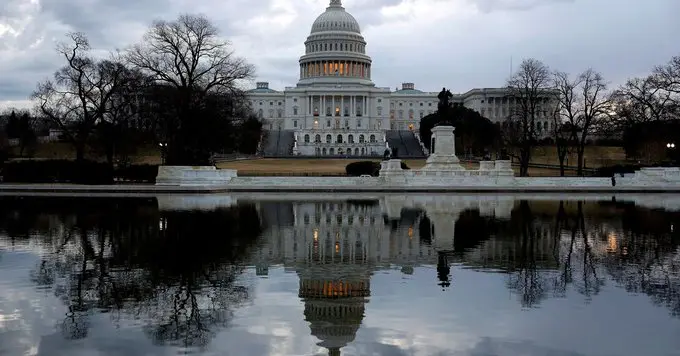
The U.S. House of Representatives has approved a record 901-billion-dollar National Defense Authorization Act (NDAA) for fiscal year 2026, strengthening Washington’s military commitments in Europe and Ukraine while cutting several domestic programs.
RELATED:
Ukraine and Europe to Work on Amendments to Peace Plan: Zelensky
The bill passed with 312 votes in favor and 112 against, and now moves to the Senate for debate before the end of the year. The NDAA, adopted annually with bipartisan backing, sets the direction of U.S. defense policy for the coming cycle.
House Speaker Mike Johnson described the bill as a “cornerstone of President Trump’s peace-through-strength agenda.” He emphasized provisions including a 3.8 percent pay raise for service members, expanded troop deployments to the U.S.–Mexico border, reinforced missile defense capabilities, and steps aimed at “deterrence against China in the Indo-Pacific.”
US House passes $900 BILLION National Defense Authorization Act
The bill provides $800 million in military aid for Ukraine over the next two years pic.twitter.com/wOGnSCPCx6
— RT (@RT_com) December 10, 2025
The legislation allocates 400 million dollars in military assistance to Ukraine in 2026 and maintains the same level of support for 2027. It also stipulates that U.S. troop levels in Europe cannot fall below 76,000 without congressional approval.
The NDAA includes 7 billion dollars in cuts to Pentagon administrative expenses, reduces climate-related programs by 1.6 billion dollars, and eliminates 40.5 million dollars in diversity initiatives.
At the same time, the Defense Department under Secretary Pete Hegseth has begun shifting strategic attention toward Latin America. The Pentagon has launched operations in the Caribbean Sea and the Pacific Ocean targeting alleged drug-trafficking vessels, though their rationale has been questioned.
The vote came one day after President Trump sharply criticized European governments, characterizing Europe as “in decline” due to migration policies he labeled “politically correct” and the leadership of “stupid” officials. Citing themes from last week’s National Security Strategy, he warned of the “disappearance of civilization” in Europe. Trump also mocked NATO’s dependence on the United States, saying, “NATO calls me ‘dad’.”
The US House of Representatives passed a massive defense policy bill authorizing a record $901 billion in annual military spending, paving the way for the must-pass measure to become law for a 65th straight year https://t.co/IFgLwXS2wZ pic.twitter.com/Xob67zNNPv
— Reuters (@Reuters) December 11, 2025
Despite the president’s remarks, the NDAA 2026 signals bipartisan consensus on maintaining U.S. engagement with the Atlantic Alliance, even as isolationist positions gain traction in some political sectors.
House Republicans promoted the bill on social media, stating: “Today, the @HouseGOP passed the FY2026 #NDAA to equip America’s Armed Forces with the tools to confront threats today and tomorrow. This bill ensures our warfighters can fight and WIN—because We The People deserve a military guided by one creed: America First.”
Opposition also emerged from the right. Congresswoman Marjorie Taylor Greene argued on X that “financing foreign aid and wars puts America last” as she announced her vote against the bill.
With Senate review pending, the NDAA 2026 highlights Washington’s intent to sustain its overseas military presence while reshaping internal priorities, prompting continued debate over the direction of U.S. defense policy.
From teleSUR English via This RSS Feed.