

Imagine you’re behind on your council tax. Maybe you forgot, maybe you’re short on cash – or maybe you’re one of many people who’ve had issues with the council’s direct debit system, so you did a manual bank transfer instead, which the council didn’t register. Or maybe your windows are simply too dirty.
For this, the council can prevent you from living in your home, even if you own it. Maybe for six months, maybe until the dispute’s sorted, maybe forever – in which case the council could repossess your home and slap you with tens of thousands of pounds in costs for the privilege.
This scenario – unimaginable for British homeowners or even renters – is almost exactly the situation for tens of thousands of people across England and Wales. They’re at the mercy not of some rogue council or Labour slumlord, but a charity.
Meet the CRT.
The Canal & River Trust (the CRT) oversees 2,000 miles of England and Wales’s waterways, from Lancaster to Basingstoke, rural Wales to London’s docklands. Its net assets are worth over £1bn.
From 1962 to 2012, the CRT was British Waterways, a government-owned public body. Unlike those infamous water infrastructure disasters, it wasn’t privatised in the 1989 Water Act. at least not wholly. In 2004, British Waterways began to be restructured into 13 regional waterways and a commercial arm, British Waterways Marinas Ltd (BWML), which oversaw 18 coastal and inland marinas. In 2012, the Tory-Lib Dem coalition government incorporated the regional waterways and BMWL into the CRT, a charitable trust.
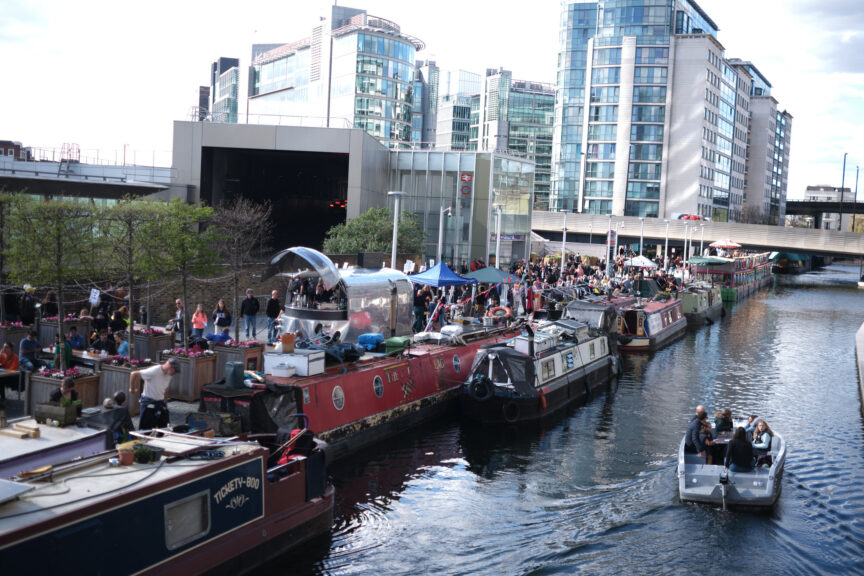
Amidst the Cameronite big society push to shrink state oversight and proliferate quangos, the CRT was intended to resemble the National Trust, in that it should manage itself without burdening the state. That didn’t work, perhaps because the two trusts differ significantly. While the National Trust oversees heritage properties and landscapes, the CRT’s remit is far broader. Among its duties, the CRT manages boating transportation links like locks; ecosystems and water-based habitats; national heritage sites; climate mitigation and flood management; and tourist locations like Camden Lock and Birmingham’s winding canal network. It also houses the thousands of people in England and Wales who live on houseboats. The CRT’s responsibilities come under no fewer than six government departments’ purview. No British charity is tasked with doing so much, yet with so little.
Though no longer government-run, the CRT still gets a large proportion of its annual revenue (22% of it in 2023-24) from government grants. Since the CRT’s establishment in 2012, it’s been granted £52.5m a year from the Department for Environment, Food and Rural Affairs (Defra). That amount hasn’t increased with inflation, however – if it had, the CRT’s annual grant would be £76.3m – nor has it increased to reflect the growing numbers of people living on the waterways. In London, that number has almost doubled since 2012, as people seek cheaper accommodation.
In 2023, Defra confirmed that it will reduce the CRT’s grant to £31.5m by 2037. The CRT warned parliament this would create a shortfall of £50m a year by 2037, forcing the trust to further commercialise and increase its user charges. As continuous cruiser Alain Gogh Olaya put it to Novara Media, the CRT is “set up to fail”. It’s all “part of the grander narrative of managed decline,” Gogh added, saying that the CRT was “given an impossible task by David Cameron,” he added: “The state doesn’t want to deal with it. You’re on your own.”
And commercialise it has. In 2018, the CRT sold most of its marinas for an undisclosed sum to Lloyds Banking Group’s private equity firm, Lloyds Development Capital, since rebranded Aquavista and bought by the French private equity company Antin. This year, Aquavista turned nearly £5m profits.
Such corporate sell-offs might seem shocking were it not for the fact that one of Britain’s most powerful charities is run by property developers.
Definitely not a landlord.
These days, the trust makes roughly 14% (£55.2m) of its annual income from around 33,080 people who currently pay it on average £1,670 a year for boat licences. The majority are leisure boaters, while around 39% (12,100) live aboard their vessels (3,600 residential moorings and 8,500 continuous cruisers, at the last census). Many have sought refuge on the water from the ravages of the housing crisis: buying a boat, though usually a depreciating asset, is in many cases more affordable than ever-spiralling rents. London’s boater numbers have swollen by 86% in the past decade.
“Boaters are often on the fringes of society,” itinerant boater Christina Hemsley told Novara Media, and the CRT’s boater surveys support her: according to the trust’s 2023 data, 27% of live-aboard boater households earn below £20,000 (the national median is £36,700). In 2023, Wiltshire council found that 29% of local continuous cruiser boaters had gone hungry due to poverty. Another council found similarly.
33% of boaters are disabled (versus 23% of British working-age adults). The conditions the CRT places on itinerant boaters often further marginalise them. Boaters often travel back and forth within localised areas to stay within reach of work, school, family and friends. Yet the CRT often restricts or refuses to renew boaters’ licences if it considers that they have visited the same place too many times or turned around too often (the CRT’s own report admits there’s no clarity on movement requirements, recommending they implement some.) As a result, boaters struggle to access healthcare: one 2019 survey by Friends, Families & Travellers and VCSE Health & Wellbeing found that boaters resided on average 47km away from their GP; almost two-thirds had missed cervical or breast screenings.
Despite determining the fates of roughly 10,000 people living aboard boats, there is denial within the CRT about its relationship to boaters. Some of its output suggests the trust sees the boaters as a nuisance rather than its responsibility, stating that itinerant boaters “created challenges” from an “operational, financial and reputational perspective”. Only this year did the CRT establish its boating sub-committee; the trust’s recent commission on boat licensing report states the trust “has not yet fully thought through its approach to liveaboard boaters”. The same report acknowledges that while the trust cannot “disregard the needs of those living on boats on its waterways”, it “is not and should not be a housing charity, nor a statutory housing provider”.
Like it or not, however, England and Wales’s waterways – and, by extension, the CRT – house thousands of people. This fact has rendered the CRT a de facto landlord, including of the 75% of boaters who own their vessels outright (fewer than 0.5% rent). Under the British Waterways Acts of 1983 and 1995, the Trust has “enforcement” powers, including to fine, restrict licences, evict boaters and repossess their boats (since 2012, the CRT has increasingly outsourced enforcement duties, including repossessions, to private companies). According to FOI data, the CRT took at least 43 legal actions against London boaters in the year to October; 5,725 enforcement cases are ongoing.
In December 2023, 62-year-old itinerant canal boater George Ward, who is disabled and reliant on benefits, was made homeless and hit with over £48,000 in costs following the forced removal of two workboats. The reason? An unpaid licence fee of just £989. Ward was then evicted from his tent on the towpath after the CRT sought trespass orders in Bristol County Court. Ward’s boat was then put on sale by a CRT subcontractor for £11,500.
“Some [boaters] are a step above homelessness,” Jack, a long-term continuous cruiser who requested anonymity for fear of reprisal from the CRT, told Novara Media. He added that the targeting and dispossession of low-income boaters “opens the door to social cleansing.”
Christina Hemsley also faced the threat of houseboat eviction from the CRT. She was told that her “movement pattern was not in accordance” with the trust’s guidance (which the CRT admits is vague) and so was put on a restricted six-month licence – in effect, a probationary period. The threat in the CRT’s communications was implicit: “Secure a mooring … or remove your boat from the trust’s waterways.”
Unable and unwilling to afford a mooring – which can cost up to £15,000 in London – Hemsley submitted meticulous movement plans to the CRT. After being rejected twice, her plan was finally accepted. Hemsley told Novara Media that she explicitly stated her “five-year-old’s life could be threatened”, but the plan was deemed “acceptable” by the CRT. [Quote from Hemsley on the ordeal]. Hemsley described the CRT as creating a “culture of fear”.
In a statement to Novara Media, the CRT pointed out that its welfare team “help [boaters] access the support that is available – including Universal Credit and benefits that will cover the cost of the boat licence … We also provide equality adjustments and support for boaters who have shorter-term difficulties.”
Less for more.
Rather than looking to the CRT for support, many itinerant boaters turn instead to count on each backing.
The National Bargee Travellers Association (NBTA) was founded in 2009 to represent the itinerant boat dweller community, and now has around 2,000 members. I recently co-authored a report for the NBTA, Stop the Surcharge, examining the CRT’s new levies on boaters.
As well as targeted casework supporting boaters, NBTA conducts regular campaigns. Its previous campaigns have included one against the CRT’s so-called “safety zones” on the River Lea, which it argued put the interests of “vocal and powerful” rowing clubs against houseboat dwellers. Another campaign targeted chargeable moorings introduced in central London in 2024, where it now costs up to £35 per night to moor on spaces that were once freely accessible. The association also holds parties such as this spring’s Boaters’ Big Bash to raise awareness of and fundraise for its activities.
NBTA’s most recent campaign is against the spiralling surcharges on boaters. In the past 13 years, the trust has increased its itinerant boat license fees significantly above inflation. Between 2011 and 2024, the CRT increased its license fees by around 127%, during which time inflation (measured by the consumer prices index) was 43%. According to the CRT, boaters’ licences will increase at above-inflation rates.
Then there are the surcharges. Since 2024, the CRT has levied additional charges on boaters without moorings, increasing from an additional 5% on top of the service charge to 25% by April 2028. In September 2023, the trust announced an additional surcharge fee of 50% on wide-beam boats. This means that some boaters will pay an extra 75% for licences by 2028, as well as their above-inflation license fee increases. Meanwhile, the CRT is now considering axing more affordable “rivers-only” licences, which allow boaters to use a more limited network of canals and rivers.
The NBTA views these spiralling fees as an “attack on our community and our way of life”, though boaters might accept this fee jump if they felt concomitant improvements in their material living conditions. On the contrary, boaters and data say the trust is failing to provide many of the most basic services.
Take water and sanitation: according to FOI data, the CRT built no new chemical toilet disposal facilities or water points along the waterways since 2013. The lack of facilities forces boaters to take matters into their own hands. Graham,* an itinerant narrowboater and self-anointed “guerrilla plumber” who also requested anonymity, fearing CRT reprisal, travels the waterways fixing broken pipes, toilets, wash basins, and water points to stop raw sewage from entering the waterways. He shares his handiwork online, tagging relevant authorities. Boaters thank Graham, but he isn’t thrilled about it: “We’re charged more and more money, and I’m fixing the bloody thing,” he lamented to Novara Media.
Bins are another major issue. There were already 43 fewer waterside wheelie bin facilities in 2023 than in 2012, and those there are rarely collected. In 2013, the CRT outsourced bin collection to waste management company Biffa, the same company deemed “unacceptable” by Epping Forest district council in 2023 for failing to perform bin collections. Several boaters told Novara Media that it often took weeks for waste to be dealt with after they reported it.
In October, the CRT announced its closure of all “nonessential” facilities, including toilets, showers, laundrettes and bins – a change that will hit smaller live-aboard vessels and workboats without on-board facilities especially hard. Naturally, many consider these facilities essential.
Rather than supporting live-aboard boaters by providing necessary, functional facilities, the CRT’s management spends thousands of pounds per boat removal by private subcontractors – costs levied onto dispossessed boat owners – whilst enacting diminutive cost-saving measures in critical areas.
Canal kleptocracy.
Some note that many of the CRT’s top brass – its top 25 staff are paid a collective £1.9m annually – are drawn from the private sector. Not only the private sector, but financial and property development sectors. More troublingly, certain developer-trustees continue working for companies that profit, or have profited, from the CRT.
Chief investment officer (CIO) Stuart Mills, the CRT’s highest-paid staff member, with a salary of £243,341 in 2024, is also a director of Waterside Places, a commercial subsidiary of the CRT (50% of whose profits return to the charity). Mills was responsible for – or at least strongly supported – selling off the CRT’s marinas to Aquavista.
Before working at the CRT, Mills was director of Wood Wharf developers, overseeing the sale of the marinas from British Waterways to Canary Wharf Group in 2012, soon before it became the CRT. Mills also now directs Port Loop, a profit-making Birmingham canal-side brownfield regeneration site in which the CRT is a named partner. The CRT denies that Mills’ directorship constitutes a conflict of interest because he’s not a shareholder and “doesn’t receive any remuneration.” But, given his background, it seems plausible that a property developer as CIO will make decisions tilted in favour of private property development interests, not necessarily the public good.

Also among the CRT’s “key management personnel” is its trustee and investment committee chair, Ian Peters. His background includes Peabody Group’s housing subsidiary, also named Peabody. The construction giant’s subsidiaries, including Peabody Waterfront Limited, have potential overlapping interests in waterside regeneration and “canal community partnerships”, such as Thamesmead waterfront properties. Similarly to the CRT’s non-profit stance, Peabody’s housing association is not-for-profit; however, the companies financing, constructing, and managing its homes are for-profit. Just as the CRT outsources its charitable duties to contractors, so too housing associations increasingly rely on corporate bond markets.
Are non-profits like the CRT and Peabody – well-intentioned though their staff may be – fronts for asset speculation and sell-offs in the private sector? And are the CRT’s investment decisions being made by people with those inclinations?
The question would be easier to answer were the trust transparent. But the CRT’s investments are somewhat opaque, as Gogh discovered upon making several unsuccessful FOI requests regarding its investment decisions. At the CRT’s annual meeting in mid-October, Gogh again sought clarification on the trust’s recent financial investments from asset sales, noting that the CRT “sold £52.8m of our properties and reinvested them” into obscured financial investments. In its response, trustees directed Gogh to its annually reported property disposals – the CRT published at least 74 property disposal public notices since November 2021 – but offered no additional information on investment decisions, saying the trust considers these “private” matters.
The CRT’s operations are “classic neoliberalism … privatisation masquerading as charity,” said Jack, who sees a “culture of asset-stripping” akin to “insider trading with access to public assets”.
“It’s kleptocratic,” Jack told Novara Media.
The CRT denies that Mills’ directorship constitutes a conflict of interest because he’s not a shareholder and “doesn’t receive any remuneration.”
Under new management.
Amongst some boaters, there is cautious optimism about the CRT’s new CEO, Campbell Robb, previously of homelessness charities Nacro and Shelter. They hope Robb might better understand the waterways’ role as a home to thousands of people, though there are early signs that may not be the case.
At the trust’s annual public meeting in October, NBTA chair Pamela Smith asked Robb what approach he’d take to waterways enforcement, given its current perception among her members as “bullying, punitive, and damaging”. Robb responded that his arrival and the boat licensing commission’s report signalled “a real opportunity for … a real reset.”
Later, endorsing the commission’s report, Robb said the CRT must “work closely with boaters across the canal network to bring about improvements in relationships and to make the system work fairly and effectively.” Yet despite acknowledging the housing crisis and boaters’ particular victimisation by it, Robb fell back on the CRT’s old line: “ the trust is not a housing charity”.
Whether the CRT will implement the report’s various technical prescriptions – from greater clarity on movement requirements, to ‘demand management’ around licences, to greater enforcement powers – remains to be seen. Even if it does, it’s unclear whether boaters will benefit.
“From further ad-hoc differential (discriminatory) pricing and regional licence rationing to a draconian increase in enforcement powers and the removal of the rivers-only licence discount,” NBTA said in its initial response to the CRT’s report, “the commission’s recommendations give the CRT the ammunition to seek the legislative changes which would threaten the very existence of our community.”
Responding to NBTA’s statement on its report, the CRT told Novara Media: “We’ve recognised that we don’t always get it right in our communications … [removing] a boat from the water is upsetting and is always a last resort, after we’ve repeatedly tried to resolve the issues and difficulties with the boat owner. Any decision to remove [live-aboard boats] … [is] independently scrutinised by a Judge.”
“It’s possible to imagine a world where, instead of boaters protesting, they’re proudly posting the CRT signs and fundraising,” Hemsley told Novara Media. In reality, boaters feel they’re fighting a daily battle – one that shows no signs of abating.
Cameron Baillie is editor of New Sociological Perspectives and The Student Intifada and a translator for The Orinoco Tribune. He co-authored Stop The Surcharge.
Jack Rhodes-Worden and Silas Lehane are investigators with the Movement Research Unit and co-authors of Stop The Surcharge. Both contributed research to this report.
From Novara Media via This RSS Feed.
An interesting read.
"The CRT denies that Mills’ directorship constitutes a conflict of interest because he’s not a shareholder and “doesn’t receive any remuneration.”
This always strikes me as a justification in the opposite direction. He’s obviously getting something so good from his directorship that it’s worth doing for free.