


By Rachael Mellor Dr. Norbert Stute, Common Dreams, December 10, 2025
An alternative to the Nobel Peace Prize honors those who truly align with Alfred Nobel’s original will and celebrates their achievements.
The annual Nobel Peace Prize ceremony takes place on December 10 in Oslo, Norway. In a symbol of Western hypocrisy, the 2025 Nobel Peace Prize was controversially awarded to María Corina Machado, the leader of Venezuela’s hard-line right-wing opposition. Coupled with US President Donald Trump’s contentious nomination and the awards’ declining credibility, it’s time we examine the merits and effectiveness of the once-prestigious award.
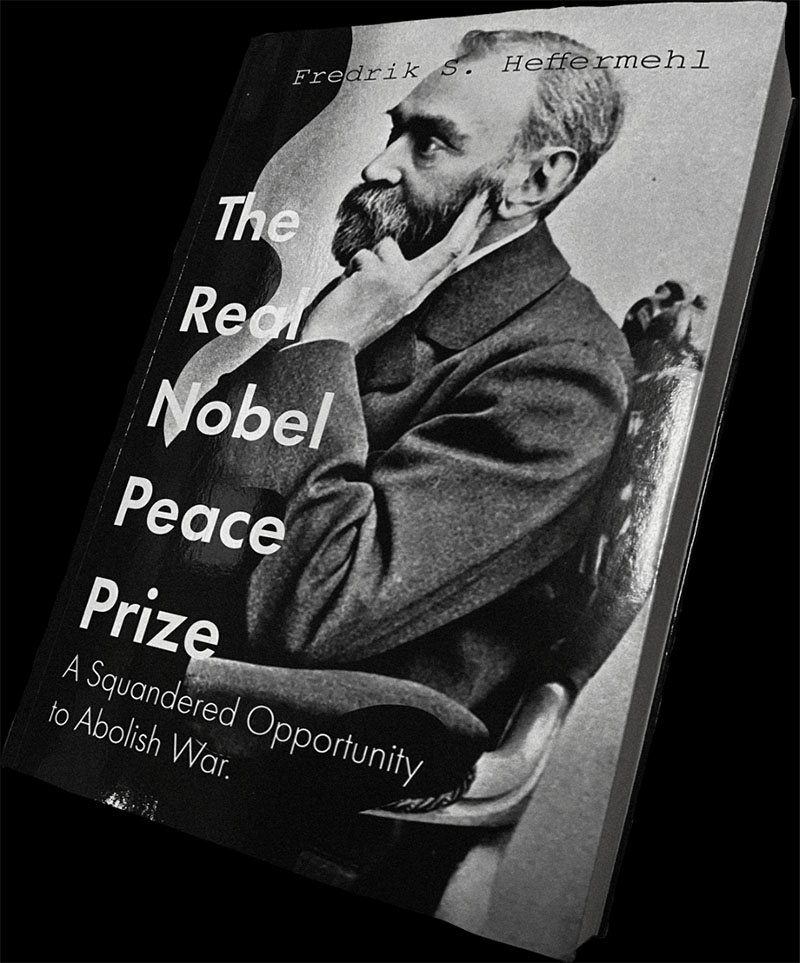
The late Fredrik S. Heffermehl, a Norwegian lawyer and author, long championed a critical examination of the Nobel Peace Prize and its alignment with Alfred Nobel’s original will— “…the person who has done the most or the best work for fraternity between nations and for the abolition or reduction of standing armies as well as for the holding and promotion of peace congresses.”
In 2014, he established the Swedish peace organisation, Lay Down Your Arms, which fights against war and armaments, and annually honors a ‘“champion for peace.” The 2025 recipient is United Nations Special Rapporteur on the Occupied Palestinian Territories Francesca Albanese.
What Nobel Really Wanted
Criticisms of the Nobel Peace Prize have grown louder in recent years as politics seem to have hijacked the award’s subjectivity. As if to exemplify this exact point, just take Trump’s shameless campaign for the 2025 award.
As of 2021, only 33 recipients have qualified under Nobel’s founding principles in the 120 years since its founding. The further the award has drifted from peace, the more it has lost its former prestige and, more importantly, its ability to foster long-lasting, sustainable peace.
There are many instances in which laureates are champions of noble causes that, while commendable, are not directly aligned with peace but rather with human rights, democracy, the environment, or sustainability. In the worst cases, recipients were former war makers, and the prize was either politically motivated or awarded prematurely. Controversial Nobel Peace Prize laureates over the years include Henry Kissinger, Menachem Begin, Yasser Arafat, Barack Obama, and Abiy Ahmed.
The increasing Eurocentricity is another point of debate, as a disproportionate number of laureates hail from Europe and North America. The award seems to support Western values and power structures over those from the Global South. Evidence of gender bias is also very apparent, as the peace efforts of women have historically been massively underrepresented. By 2025, only 16% of the individual Nobel Peace Prize recipients were women.
Nobel’s wish was that his prizes go to those who have demonstrated the “greatest benefit on mankind.” Nobel Peace laureates who stand out for their remarkable contributions to creating a more peaceful world include the International Committee of the Red Cross, Martin Luther King Jr., the Dalai Lama, Nelson Mandela and F.W. de Klerk, IPPNW, Campaign against Landmines and Jody Williams, Médecins Sans Frontières, United Nations and Kofi Annan, Martti Ahtisaari, ICAN, and Nihon Hidankyo.
The Lay Down Your Arms Peace Prize
Established in 2024, this alternative to the Nobel Peace Prize honors those who truly align with Alfred Nobel’s original will and celebrates their achievements.
The first-ever recipient in 2024 was David Swanson. He is an American author, activist, and journalist, prominently known for his work in the anti-war movement with World Beyond War. He is the co-founder, executive director, and board member of this global organization dedicated to ending war and establishing just and sustainable peace.
This year, the award goes to Francesca Albanese, who “has forcefully and unwaveringly worked against Israel’s full-scale war on the occupied Palestinian territories, in particular Israel’s ongoing genocide against the Palestinian people.”
Albanese has tirelessly pushed for nations to implement an embargo on arms sales to Israel, put an end to all trade agreements, ensure accountability for war crimes, and complete Israeli withdrawal from occupied territories. She highlights the world’s responsibility to stop arming, funding, and profiting from Israel’s atrocities in Gaza.
Throughout the now two-year war, which has resulted in the death of more than 70,000 Palestinians, Albanese has been one of the most outspoken advocates for Palestinian rights. The Israeli onslaught on Gaza has resulted in 2.2 million people enduring emergency levels of food insecurity and left more than 170,000 injured, many with life-changing wounds.
Fredrik S. Heffermehl
Heffermehl’s advocacy for a return to Nobel’s original criteria has sparked international debate. His work questioned whether political and commercial interests have skewed the selection process. By bringing greater transparency to the criteria and selection process, Heffermehl sought to ensure that the Nobel Peace Prize upholds both its founder’s legacy and continues to serve as a meaningful catalyst for lasting global peace.
Summarized in his book, The Nobel Peace Prize: What Nobel Really Wanted, Heffermehl argued that the prize has frequently deviated from Nobel’s original criteria to reward those dedicated to disarmament, demilitarization, peace negotiations, mediation, peace journalism, and conflict resolution.
In his career, he held respected positions as vice president of the International Peace Bureau (IPB) and of the International Association of Lawyers Against Nuclear Arms (IALANA). He also led the Norwegian Peace Council from 1985 to 2000, and authored multiple globally celebrated books on peace.
The Need for Reform
The Nobel Peace Prize has become a political prize and is too often given to champions of democracy, the environment, or human rights. In order to celebrate true champions of peace, we must return to Alfred Nobel’s original intention for the prize.
Members of the Norwegian Nobel Committee who are responsible for selecting Nobel Peace Prize laureates are selected by the Norwegian Parliament. More often than not, they are former politicians of major parties, or if not, they are closely associated with them. Let’s not forget that Norway is a founding member of NATO and is closely associated with the EU and its ideologies.
This is not just about reputation and status; if the Nobel Prize is losing its credibility, it also loses the impact it can have on world peace. We must ensure that, first and foremost, lasting sustainable peace remains the primary goal of this prestigious award.
In the words of Fredrik Heffermehl, “Peace is not just a dream, but a possibility within our grasp.”
The post Francesca Albanese: Winner of the Lay Down Your Arms Award appeared first on World BEYOND War.
From World BEYOND War via This RSS Feed.