

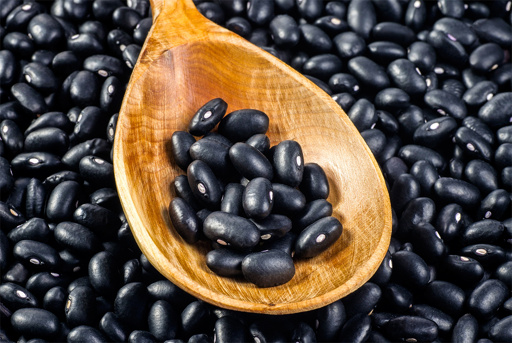
These two articles by Braulio Carbajal, Alfredo Valadez, Jesús Estrada and Saúl Maldonado originally appeared in the December 9, 2025 edition of La Jornada (article one, article two), Mexico’s premier left wing daily newspaper. They have been combined into one article without to provide a more complete view of one of the facets of Mexico’s current agricultural crisis, which began with neoliberalism but carries on today, as the Mexican government is financially unable to subsidize agriculture enough to compete with gigantic US agribusiness subsidies, and unwilling to do what would be required to protect Mexican agriculture and food sovereignty.
Bean producers are facing a new crisis. While the 2025 spring-summer bean harvest is progressing, according to official data, with a higher volume than last year, generating a greater supply, this is happening in a context of low prices for them, further pressured by the constant import of this staple food from the United States.
In the fields, according to reports, farmers receive between nine and twelve pesos per kilogram of beans (depending on the variety), an amount insufficient to cover the high production costs resulting from the increase in freight, fertilizer, and wage prices. Adding to this is the preference for beans harvested on the other side of the border, which arrive at the Central de Abasto (wholesale market) at a final price of between fifteen and sixteen pesos per kilogram.
These low prices don’t reach the end consumer, who pays up to 400 percent more than what producers receive. According to data from the Agricultural Markets Consulting Group (GCMA), while the price paid to black bean producers is 10 pesos, it sells for almost 48 pesos per kilo in supermarkets, a difference that goes to the intermediaries.
All varieties follow this trend; for example, the producer is paid 12.2 pesos per kilogram of pinto beans, while the consumer pays 39.9 pesos; meanwhile, the clear variety is paid 15 pesos per kilogram, while families must acquire it at 55.8 pesos per kilogram; meanwhile, the producer is paid 21.5 pesos per kilogram of sulfur beans, while it is offered to the consumer at 57.3 pesos.
In Zacatecas, Durango, and Chihuahua, the harvest is being paid for as little as 10 pesos per kilogram, which has sparked discontent and protests.
While the 10 pesos per kilo is paid to black bean producers is 10 pesos, it sells for almost 48 pesos per kilo in supermarkets, a difference that goes to the monopolies.
In the case of beans, explained Juan Carlos Anaya, general director of the GCMA, the federal government has set a guaranteed price of 27 pesos per kilogram, which is well above market levels, so there is no way for the entire harvest to be included in the program.
Furthermore, the specialist said, absorbing 70 percent of national production, at current international prices, would imply a fiscal cost exceeding 7.7 billion pesos.
“There is not enough funding to operate the program; an extraordinary funding mechanism (loans or pledging) would be required, given the risk of buying at high prices, storing at high prices, and not being able to market it in a timely manner, generating financial losses,” he explained.
According to data from the Agri-Food and Fisheries Information Service, Mexico’s bean production between January and October reached 1.2 million tons, 15 percent higher than the 1.016 million tons produced during the same period in 2024.
So far this year, GCMA reports, Mexico has imported around 233,000 tons of beans, an amount that is not needed to meet national demand, but is purchased from producers in the United States, because it is considered to have an attractive price.

Although the harvest shows a larger volume than in 2024, producers are facing low prices that don’t cover costs. In Zacatecas, Chihuahua, Durango, and Sinaloa, they are demanding that the government put the collection centers into operation. Photo: La Jornada
Discontent is spreading among bean producers in several states
Bean producers in Zacatecas, Chihuahua, and Durango are exasperated with the federal government, which has not put into operation most of the collection centers to store the legume obtained in the recently ended agricultural cycle, despite the fact that there are commitments and agreements to accumulate the grain signed a month ago.
Currently, the more than 60,000 bean farmers in Zacatecas are facing a serious crisis, in an extraordinarily good harvest year: more than 350,000 tons of the legume were produced, confirming the state’s national leadership in grain production, a dilemma they share with their counterparts in Durango and Chihuahua, which are number two and three in bean plantations.

María Luisa Albores, Food for Well-being (formerly SEGALMEX)
The most serious issue is that the problem has been accumulating since last year, as most of the authorized warehouses, at least 52 collection centers, cannot open to receive new shipments of the legume, because they still have more than 20,000 tons stored from 2024. For technical and sanitary reasons, they should not be “combined”.
The farmers again point to the federal government as responsible.
Leaders and officials warn that the problem is the bureaucratic centralism of María Luisa Albores, head of Food for Well-being (formerly SEGALMEX), a federal agency that in the case of Zacatecas alone requires more than 1.8 billion pesos to begin acquiring approximately 30 percent of the total harvest of the current agricultural cycle.
Critical Problem
The problem is critical because federal authorities, in coordination with the state government, are more than a month behind schedule in starting the bean collection.
The harvest takes place in October. Two agencies in particular, the Ministry of Agriculture and Rural Development (SADER) and the state Ministry of Agriculture, had committed to delivering tens of thousands of new sacks for collecting beans on November 3rd, and the collection of some 120,000 tons of the 350,000 tons harvested was scheduled to begin on December 10th, as announced at a public event by the Morena party governor, David Monreal Ávila. But the sacks were never delivered, nor were the collection centers opened.
In Chihuahua, SADER’s Food for Well-being program will buy less than 10 percent of the state’s bean harvest, which, along with surpluses and imports allowed by free trade with the United States, has caused the price of the grain to fall to 14 pesos or less per kilogram (1,400 pesos per ton).
Hernán Hernández Alderete, president of the State Committee of the Bean Production System, warned that thousands of rainfed and small-scale farmers are at risk of bankruptcy after planting 75,000 hectares of beans in Chihuahua municipalities such as Namiquipa, Riva Palacio, Cuauhtémoc, Guerrero, and Cusihuiriachi. He believes that the farmers “will be forced to sell their harvest at low prices and will not recoup their investment in seeds and fertilizers.”
Meanwhile, in Durango, 4,000 tons of beans from a harvest exceeding 160,000 tons, produced by 386 growers, have been stored under the federal scheme; therefore, due to a lack of income and government purchases, farmers have begun selling their legume to intermediaries, called coyotes, at a price of 10 pesos per kilogram, even though the official program price would be 27 pesos.
In this context, seasonal farmers of the Yurimuni bean variety, born in Ahome, Sinaloa, warned that if a meeting with state authorities is not held by Tuesday at the latest and there is no favorable solution for them, they will indefinitely occupy the San Miguel Zapotitlán toll booth on Wednesday, as it is urgent to “have a clear destination” for their grain production.
-

Bean Imports from US Worsen Mexico’s Farm Crisis
December 9, 2025December 9, 2025
Subsidized US beans are flooding Mexico, above the amount required to meet national demand, while the government fails to meet commitments it made to producers only a month ago.
-

Mexico’s PT: 35 Years of Struggle
December 9, 2025December 9, 2025
The Workers Party, originating in Mexico’s Maoist movement and a long-time ally of AMLO since his 2006 Presidential campaign, was founded on December 8, 1990.
-

Via Campesina Latin American Coordination Holds 8th International Congress in Mexico
December 9, 2025December 9, 2025
The world’s largest peasant & Indigenous movement expressed its solidarity with Mexican farmers, who have been striking to demand the government remove basic grains from free trade agreements.
The post Bean Imports from US Worsen Mexico’s Farm Crisis appeared first on Mexico Solidarity Media.
From Mexico Solidarity Media via This RSS Feed.