

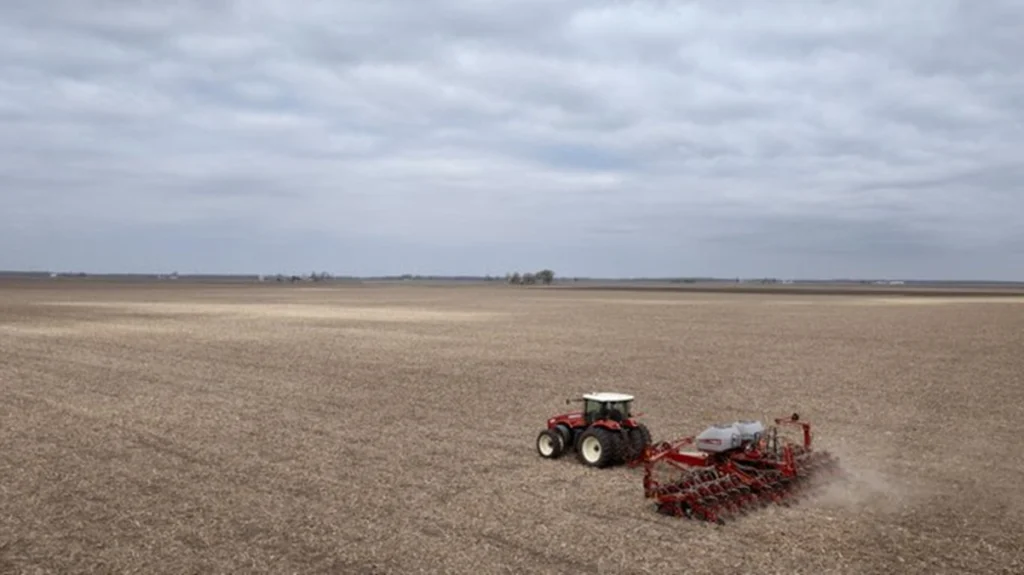
The rescue package came as inflation and high tariffs keep raising wider concerns.
On Monday, the administration of U.S. President Donald Trump unveiled an aid package of US$12 billion to farmers hit hard by tariff policies, as weaker demand, rising costs and falling sales strain income.
RELATED:
U.S. Soybean Farmers Standing at a Financial Precipice: ASA
The rescue package came as inflation and high tariffs keep raising wider concerns. A series of recent policy signals highlighted shifts in both domestic affordability and trade-related measures.
RESCUE OF FARMERS
The long-awaited aid package includes up to US$11 billion in a one-time payment to crop farmers under the Farmer Bridge Assistance (FBA) program operated by the U.S. Department of Agriculture (USDA), while the rest of the balance will be for farmers not covered by the FBA.
Speaking at a roundtable meeting in the White House, Trump underscored the inflation, bankruptcies and rising suicides affecting U.S. farmers, attributing the hardships to policies of the previous administration.
The USDA is expected to announce rates on payment by the end of December and distribute the money by the end of February 2026, said U.S. Agriculture Secretary Brooke Rollins.
The aid package was mulled months ago but was delayed by a 43-day federal government shutdown that began on Oct. 1. Trump said that his administration will take off environmental protection requirements imposed on U.S. agriculture equipment manufacturers to drive down costs.
“Trump wants credit for trying to fix a mess of his making. Trump’s tariffs are hammering our farmers, making it more expensive to grow food and pushing farmers into bankruptcy. Farmers need markets to sell to — not a consolation prize for the ones he wrecked,” Senate Minority Leader Chuck Schumer said.
Left: Trump’s Agriculture Secretary claiming there is “almost zero evidence” that Trump’s tariffs are hurting farmers
Right: Evidence that Trump’s tariffs are hurting farmers pic.twitter.com/JWQU8nAC8c
— FactPost (@factpostnews) December 9, 2025
TARIFF STICK
The U.S. Consumer Price Index year-over-year growth was 3 percent for September 2025, slightly up from 2.9 percent in August. In particular, beef and veal prices in September increased by 14.7 percent year on year, with coffee prices up 18.9 percent.
In response to growing concerns among American consumers, on Nov. 14, Trump rolled back tariffs on more than 200 food products, including staples such as coffee, beef, bananas and orange juice.
The new relief represents a significant change of direction for Trump, who has long held that the extensive tariffs he introduced earlier this year are not causing inflation. However, his enthusiasm for tariffs has never waned, and he has been wielding the tariff stick consistently, sometimes merely using tariffs as a “punishment” against other countries.
On Monday, Trump threatened to impose additional 5 percent tariffs on Mexican goods if the southern neighbor does not supply water based on a bilateral treaty signed in 1944.
“Mexico still owes the U.S. over 800,000 acre-feet (986.4 million cubic meters) of water for failing to comply with our Treaty over the past five years. The U.S. needs Mexico to release 200,000 acre-feet (246.6 million cubic meters) of water before Dec. 31, and the rest must come soon after,” Trump said, adding that he will “impose a 5 percent Tariff on Mexico if this water isn’t released, IMMEDIATELY.”
Farmer: Agriculture in this country has been in a complete turbulence and turmoil since Trump got elected. Farm suicides, farm bankruptcies, farm foreclosures are all up under his watch. And I want to remind Trump that we’re in the position that we’re in because of his tariffs. pic.twitter.com/8HYhLguI1U
— FactPost (@factpostnews) December 8, 2025
POLITICAL BACKFIRE
As domestic concerns remain prominent, Democrats have won a string of victories in state and local elections in Virginia, New Jersey and New York City. Trump’s approval ratings have hit their lowest point since he returned to office in January, especially because of the rising cost of living, which many Americans blame on his tariffs.
Trump has been insisting that prices for essential goods such as beef, eggs and coffee are falling, and that he is fixing what he describes as a mess left by Joe Biden, his Democratic predecessor.
However, he appeared to soften his message slightly on Monday, acknowledging an affordability “problem” after dismissing it as a “con job” last week. “The Democrats caused the affordability problem, and we’re fixing it,” he said.
Farmers have supported Trump politically, but his trade policy and frequently changing tariff rates have concerned them, wrote the Washington Post.
“The farmers’ problem is not entirely government-grown, but there is a big trade policy aspect to it,” said Scott Lincicome, director of general economics at the Cato Institute, quoted by Politico. The tariffs have also introduced a new level of “unprecedented, crippling and truly insane complexity” to operating businesses, said Lincicome.
Richard Neal, the top Democrat at the U.S. House of Representatives Ways and Means Committee, said the Trump administration was “putting out a fire that they started and claiming it as progress.” “The Trump Administration is finally admitting publicly what we’ve all known from the start: Trump’s Trade War is hiking costs on people,” he added.
The anti-war movement and calls for peace get louder in the United States. Plus, a dance battle between Venezuelan President Nicolas Maduro and U.S. President Donald Trump. pic.twitter.com/GTkfHTW7l6
— teleSUR English (@telesurenglish) December 8, 2025
teleSUR/ JF
Source: Xinhua
From teleSUR English via This RSS Feed.