

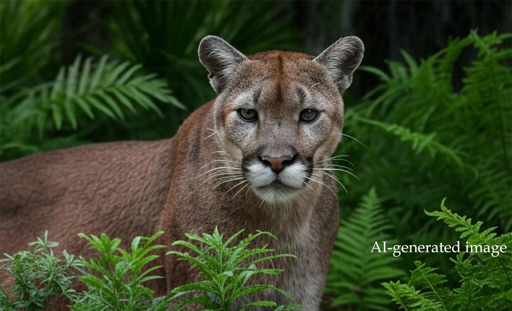
When Houssein Rayaleh received a WhatsApp message from a local ecotourism guide showing footage of a lioness in Djibouti, he was excited. The video showed the big cat running directly in front of a moving vehicle along Route Nationale 11, a road that Rayaleh knows well. This was shocking. Lions are officially extinct here: There are no records of Panthera leo in this Horn of Africa country. “I said whoa, we have a lion in Djibouti,” says Rayaleh, the CEO and founder of the NGO Djibouti Nature. So he forwarded the video on to the Cat Specialist Group at the IUCN, the global wildlife conservation authority. “As it happened, it was a fake,” Rayaleh says. Certain details spring out in the video identifying it as an AI-generated video, says Urs Breitenmoser, co-chair of the group. “The lion behaves very strangely and there are also a few sequences where you can actually see that it is morphologically not quite correct.” https://imgs.mongabay.com/wp-content/uploads/sites/20/2026/01/26153828/AI-generatedVideo/_1.mp4 This video of a lion sighting in Djibouti was debunked, created using AI. Lions are locally extinct there. Video courtesy of Houssein Rayaleh. Creator unknown. Luke Hunter, executive director of the Wildlife Conservation Society’s big cats program, described the video as “obviously very fake” after viewing it. But to the untrained eye, these details are nearly impossible to spot, and some damage may already be done, Rayaleh says. It may have spread far and wide across the country via WhatsApp and social media channels. He received messages, including questions from…This article was originally published on Mongabay
From Conservation news via This RSS Feed.
That’s what the article is about, the dangers of AI generated video and images of animals. From the “Key Ideas” section just under the image at the top of the article.