Yeah, but you have to ask why the conditions exist to begin with. The idea that Maduro, or the Chavistas are to blame here ignores reality. You can be a Venezuelan and also reject the reality that created the conditions which forced you to leave. In some cases those same Venezuelans fled, like some Cubans had also done, because the system being implemented to root out the neocolonial apparatus impacted them due to their material ties to that system. Meaning, some of these people were reaping rewards as servants of the neocolonial apparatus, while working people in the country suffered.
Mortality effects ranged from 8·4 log points (95% CI 3·9–13·0) for children younger than 5 years to 2·4 log points (0·9–4·0) for individuals aged 60–80 years. We estimated that unilateral sanctions were associated with an annual toll of 564 258 deaths (95% CI 367 838–760 677), similar to the global mortality burden associated with armed conflict.
So, I fully understand why people would leave. The other thing that your statement also seems to not acknowledge the class character of those who are fleeing. A 2007 Reuters article talks about the initial class character of those fleeing:
As populist President Hugo Chavez tightens his grip on the oil-producing country, wealthy and middle class citizens [emphasis mine] are fleeing, just as their counterparts did soon after Fidel Castro seized power in Havana more than 40 years ago.
Those wealthy and middle class citizens being referenced in Cuba were plantation owners, managers, and operators of American corporate interest in the country. This wasn’t all that different for Venezuela. From the same article:
“If you have young children, you want out. If you have assets that have been seized, or may be seized, you want out as quickly as possible,” Roett added. “If you have land that will be expropriated, leave sooner than later. As the alta (upper) bourgeoisie becomes more and more of a target, you want to leave before Hugo Chavez shuts the door [emphasis mine].”
“upper bourgeoisie”, those are not my words, those are the words of Riordan Roett, director of Latin American studies at Johns Hopkins University, who was interviewed by Routers for this story. The class character of those leaving in the Chavez era isn’t even being obscured from you here, it is stated rather mater-of-factually. The destination for many of these people were places like the US and Europe, according to IUSSP:
These emigrants were predominantly members of Venezuela’s middle and upper classes, including businesspeople, highly skilled professionals—especially former oil industry employees—and first or second-generation descendants of immigrants to Venezuela. Their primary destinations included the United States, Spain, Italy, and Portugal (Freitez 2011). These outflows were predominantly female (55%), with a mean age of about 28.2 years.
But as time marches on, and the sanctions ramp up, the class character of those leaving also changes, and that class character comes with it different destinations. By 2016, when the poorer band of people within the country decided to leave, many of them fled to nearby countries, and often were binational which likely eased the process of moving, again IUSSP:
The onset of the crisis (2014-2017) marked a shift from highly skilled labor migration to family migration. The Venezuelan diaspora increased from 800,000 nationals abroad in 2014 to 2 million in 2017. The average age of these additional 1.21 million migrants dropped to its lowest level in 2015 (24.9 years for men and 25.4 years for women), and about 26% were under 15 years of age. These outflows largely consisted of entire families, often binational, seeking nearby destinations. Countries such as Colombia, Chile, Peru, and Ecuador emerged as primary destinations for Venezuelans. The incipient crisis also prompted a large number of young men to migrate; for the first time, the number of migrating men surpassed that of women (102 men per 100 women).
So I’m not shocked to see that many of the Venezuelans you encounter in Europe might be celebrating the kidnaping of Maduro, who, to them, very likely represents the early changes that drove them, or their parents, out of Venezuela. You don’t, however, encounter the droves of people living in the region who left the country afterward. They might have a different understanding.
It’s worth noting that, the sanctions as applied to Venezuela are not unique, and have some very specific timing. They follow a very similar pattern to many other sanctions handed out by the US over the years. They have the same kind of impact on the population from country to country. Access to food and medical care enter into a crisis state. This was true in Nicaragua, Syria, and Venezuela. They all have the same clear goal, regime change. This isn’t the stated goal, but as was the case in Nicaragua, Syria, and Ukraine, these sanctions are only ever lifted once existing leaders and governments fall.
Specifically, in the case of Venezuela, you can see that these sanctions seem to have a very specific timing. Francisco Rodriguez, a Venezuelan opposition economist, in his study “Sanctions, Economic Statecraft, and Venezuela’s Crisis”, find a pattern in Venezuela’s oil production that highlights the direct impact of sanctions on the industry.
He notes that, joint ventures with foreign multinationals were the driving force behind the stabilization of oil output in 2008 to 2015. The economic sanctions explicitly hit these joint ventures:
these joint ventures became islands of productivity in the country’s oil sector and generated pockets of growth that contributed to the stabilization of output in the 2008–2015 period. It would be these joint ventures with foreign multinationals that would be particularly hit by the 2017–2020 sanctions.
Industry analysis at the time were predicting that Venezuela’s oil output would recover by 2017. This would indicate that there were no economic factors within Venezuela itself that prevented oil production. The failure to recover seems to be a direct result of US sanctions:
oil industry analysts were predicting a stabilization of Venezuelan oil output, and economic analysts were predicting modest economic growth fueled by the recovery of oil prices as late as mid-2017.24 The severe decline in oil production was completely unforeseen even by the forecast models that took full account of the well-known decline in investment at the time
He concludes that "economic sanctions and other actions of economic statecraft aimed at the Venezuelan government have strongly impacted the country’s economic and humanitarian conditions” and that “it is hard to deny that they have had a sizable negative impact on living conditions in the country”.
This all really calls into question the idea that the Chavistas are at fault for the conditions under which people live in the country. One has to wonder what the country would be like if these sanctions were never imposed at all.


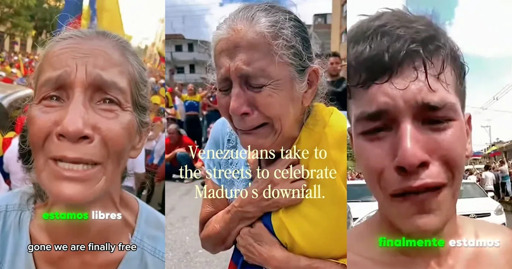
Yeah, but you have to ask why the conditions exist to begin with. The idea that Maduro, or the Chavistas are to blame here ignores reality. You can be a Venezuelan and also reject the reality that created the conditions which forced you to leave. In some cases those same Venezuelans fled, like some Cubans had also done, because the system being implemented to root out the neocolonial apparatus impacted them due to their material ties to that system. Meaning, some of these people were reaping rewards as servants of the neocolonial apparatus, while working people in the country suffered.
So, for example, a study out of Lancet Global Health estimates that US sanctions applied to Venezuela cause the deaths of more than 564,000 people each year. More than half of the dead are children under the age of 5.
So, I fully understand why people would leave. The other thing that your statement also seems to not acknowledge the class character of those who are fleeing. A 2007 Reuters article talks about the initial class character of those fleeing:
Those wealthy and middle class citizens being referenced in Cuba were plantation owners, managers, and operators of American corporate interest in the country. This wasn’t all that different for Venezuela. From the same article:
“upper bourgeoisie”, those are not my words, those are the words of Riordan Roett, director of Latin American studies at Johns Hopkins University, who was interviewed by Routers for this story. The class character of those leaving in the Chavez era isn’t even being obscured from you here, it is stated rather mater-of-factually. The destination for many of these people were places like the US and Europe, according to IUSSP:
But as time marches on, and the sanctions ramp up, the class character of those leaving also changes, and that class character comes with it different destinations. By 2016, when the poorer band of people within the country decided to leave, many of them fled to nearby countries, and often were binational which likely eased the process of moving, again IUSSP:
So I’m not shocked to see that many of the Venezuelans you encounter in Europe might be celebrating the kidnaping of Maduro, who, to them, very likely represents the early changes that drove them, or their parents, out of Venezuela. You don’t, however, encounter the droves of people living in the region who left the country afterward. They might have a different understanding.
It’s worth noting that, the sanctions as applied to Venezuela are not unique, and have some very specific timing. They follow a very similar pattern to many other sanctions handed out by the US over the years. They have the same kind of impact on the population from country to country. Access to food and medical care enter into a crisis state. This was true in Nicaragua, Syria, and Venezuela. They all have the same clear goal, regime change. This isn’t the stated goal, but as was the case in Nicaragua, Syria, and Ukraine, these sanctions are only ever lifted once existing leaders and governments fall.
Specifically, in the case of Venezuela, you can see that these sanctions seem to have a very specific timing. Francisco Rodriguez, a Venezuelan opposition economist, in his study “Sanctions, Economic Statecraft, and Venezuela’s Crisis”, find a pattern in Venezuela’s oil production that highlights the direct impact of sanctions on the industry.
He notes that, joint ventures with foreign multinationals were the driving force behind the stabilization of oil output in 2008 to 2015. The economic sanctions explicitly hit these joint ventures:
Industry analysis at the time were predicting that Venezuela’s oil output would recover by 2017. This would indicate that there were no economic factors within Venezuela itself that prevented oil production. The failure to recover seems to be a direct result of US sanctions:
He concludes that "economic sanctions and other actions of economic statecraft aimed at the Venezuelan government have strongly impacted the country’s economic and humanitarian conditions” and that “it is hard to deny that they have had a sizable negative impact on living conditions in the country”.
This all really calls into question the idea that the Chavistas are at fault for the conditions under which people live in the country. One has to wonder what the country would be like if these sanctions were never imposed at all.