

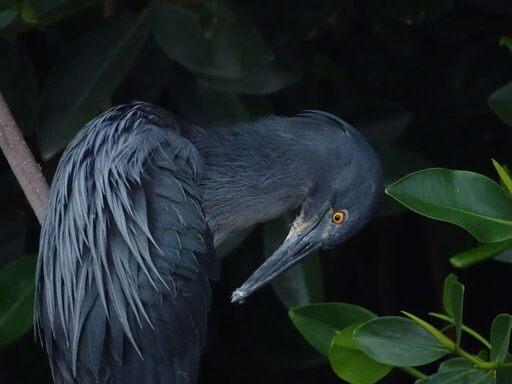
Researchers at the California Academy of Sciences kept busy throughout 2025. Along with collaborators from across the globe, they described 72 new-to-science species from six continents — creatures living in unexplored ocean depths, in plain sight on the Galápagos Islands, and in a U.S. national park. The species include a bird, two worms, two lizards, one cicada, seven plants, six geckos, 15 beetles, five mollusks, 12 bush crickets, seven fishes, two wasps, 11 sea slugs, and a skink. The Galápagos lava heron (Butorides sundevalli) is a new to science species. Photo courtesy of Ezra Mendales One species, the cardinalfish Epigonus zonatus, was found on an ocean expedition joined by Fidel Castro in 1997. The specimen sat in the CAS’s collection for nearly 30 years before scientists formally described it this year. The California Academy of Sciences is a San Francisco-based research institution with more than 100 scientists and 46 million specimens. As technology improves and scientists learn more about life on Earth, these preserved specimens are leading to new findings. Some researchers estimate that less than 20% of all the species on the planet have been described, and many will face extinction before they’re named by science. Image of juvenile (B) and adult © Angola banded thick-toed gecko (Pachydactylus caraculicus) from Namibe Province, Angola, a new to science lizard species. Photo from Parrinha et al 2025 “Discoveries like these remind us that much of life on Earth remains undocumented and therefore unprotected,” CAS virologist and chief of science Shannon Bennett…This article was originally published on Mongabay
From Conservation news via This RSS Feed.