

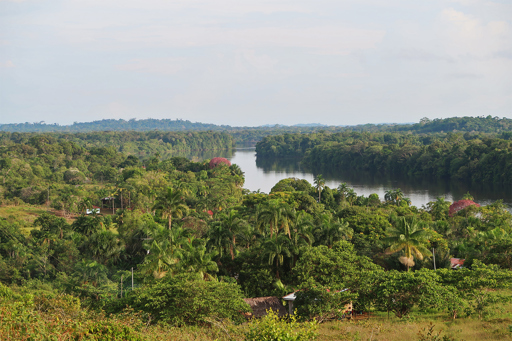
MITÚ, Colombia — Beneath the rising sun, people from nearby Indigenous communities navigate across the Vaupés River in traditional wooden canoes toward Mitú, a rapidly expanding town in the Colombian Amazon. The canoes are packed with fish, plucked from the river’s tea-colored waters hours before, and produce, harvested from their traditional gardens. To reach the town’s market, where merchants wait above a concrete slipway, the canoes stream past huge concrete sewage pipes and a statue of the Virgin Mary. As they navigate farther in, they’re no longer in the Great Vaupés Indigenous Reserve, an Indigenous territory whose borders surround Mitú and its connecting highway. They’re now in an urban frontier experiencing staggering changes in the middle of the Amazon Rainforest. Today, Mitú’s population has swelled to almost 30,000, from just over 4,000 five decades ago. This is due to an influx of Indigenous people who move between their traditional communities and the urban center, and non-Indigenous settlers who have established businesses or work for research centers or NGOs. The population boom is also due to illegal gold mining by organized crime groups and the illegal extraction of critical minerals in the wider region, including coltan, which is used in electronics and in electric vehicle batteries. Residents, NGOs and authorities have also reported an expansion in cattle farming and the illegal extraction and trafficking of timber, fish and animals. Members of the Indigenous Macaquiño community take Mongabay to visit their traditional forest garden, or chagra, in September 2025. Image by Aimee…This article was originally published on Mongabay
From Conservation news via This RSS Feed.