

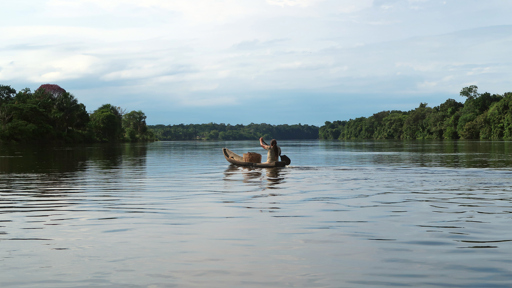
VAUPÉS, COLOMBIA – As a baby, Elisa Fernández Sánchez’ mother would place her into the bow of the canoe and glide across the murky waters of the Vaupés River in the thick Amazon rainforest. Their journey towards the traditional forest gardens was not easy, but they did it almost every day. Her mom would plunge the canoe into a series of small river channels, ducking to protect herself from the violent blizzard of branches, vines and leaves that threatened to gouge her eyes if she was not careful. Like most members of the mostly Cubeo Macaquiño community at the time, her mother respected nature and the spiritual beings that guard its sacred sites. It was dangerous to enter the forest unprotected. To enter sacred sites, the payé (an Indigenous authority responsible for maintaining the community’s cultural and spiritual well-being) had to pray to the spirits for permission. Failure to respect this rule could result in severe illness, they believed. Through rituals, prayers and their careful relationship with nature, the Macaquiño community has maintained a healthy territory. It is one of four Indigenous communities that form part of the Association of Traditional Indigenous Authorities Surrounding Mitú (AATIAM), a public entity with a state-recognized right to govern autonomously. Manuel Claudio Fernández, the captain of Macaquiño, said that the community does not care for the land; they co-exist with it. “How do we co-exist? By respecting the forest, the articulation of spirits, the water, the forest and us humans. We, the people, depend…This article was originally published on Mongabay
From Conservation news via This RSS Feed.