

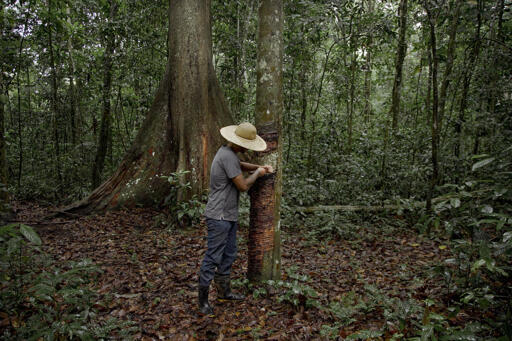
In the Chico Mendes Extractive Reserve in the Brazilian Amazon, locals tap rubber and extract Brazil nuts from the rainforest for a living. It’s a way of life dependent on the forest that goes back generations — and which rubber tapper Chico Mendes, who gave the area its name, was murdered trying to defend in 1988. The reserve has been strengthened in recent years thanks to a massive conservation program known as ARPA, the Amazon Region Protected Areas. First established in 2002 by the Brazilian government, and later expanded with the support of WWF and private donors, ARPA helps protect 120 conservation areas spanning more than 27 million hectares (67 million acres) — about the size of Aotearoa New Zealand — of the Brazilian Amazon. The program initially worked on creating new protected areas and then on designing a durable financial mechanism to support their protection. A new phase, called ARPA Comunidades (Communities), is now shifting the focus to the traditional communities who live within the forest and help protect it. Half of the conservation areas covered by ARPA are sustainable-use conservation units like the Chico Mendes Extractive Reserve, inhabited by local communities who live sustainably off the forest’s resources. “We were missing closer attention to the communities living in these sustainable-use conservation units, who were contributing to conservation,” said Fernanda Marques, project development consultant at FUNBIO, the Brazilian organization responsible for managing the $120 million fund that underpins ARPA Comunidades. Brazil nuts in the hand of Raimundão. Image © Tessel in…This article was originally published on Mongabay
From Conservation news via This RSS Feed.