

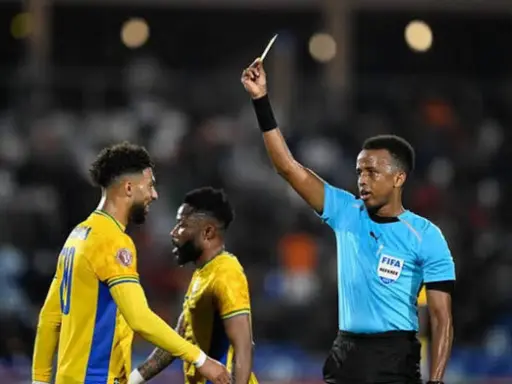
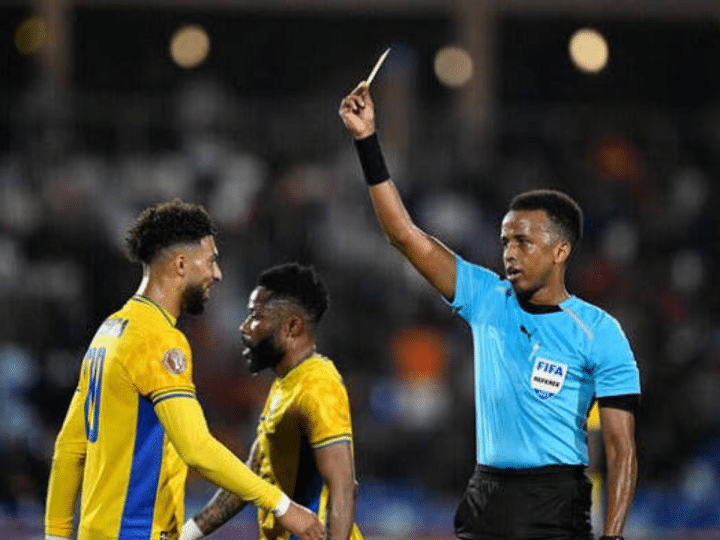
Somalia’s top referee, Omar Abdulkadir Artan, has been dramatically ruled out of the 2026 World Cup after being denied entry to the United States, ending what would have been a landmark moment for Somali football. The 34‑year‑old, voted Africa’s best referee in 2025, was set to become the first Somali official to take charge at a men’s World Cup finals. Instead, he was forced to fly back to Istanbul after being turned away at Miami International Airport.
FIFA confirmed the decision late on Monday, acknowledging that one of Africa’s most respected officials would not be part of the tournament after US authorities refused him entry.
A dream shattered at the final checkpoint
Artan travelled to Miami believing he held the correct visa to work at the tournament. Somalia remains on the US travel‑ban list, but he had been assured he could enter under the accreditation and documentation provided for World Cup officials. That confidence evaporated the moment he landed.
According to US Customs and Border Protection, Artan was subjected to “additional inspection” upon arrival on Saturday as officers assessed whether he met the criteria for entry. After hours of checks, he was deemed “inadmissible due to vetting concerns” and denied entry.
He was placed on a return flight to Istanbul, where he had been based for refereeing assignments in recent seasons.
FIFA: ‘Host governments determine who receives a visa’
FIFA moved quickly to clarify its position, stressing that it has no authority over immigration decisions made by host nations.
A spokesperson said:
“FIFA can confirm that match official Omar Abdulkadir Artan will be unable to train and officiate at the FIFA World Cup 2026 after he was denied entry into the United States. FIFA is not involved in host country immigration processes, including visa adjudications, and has been informed by authorities that Mr Artan’s status will not be changed at present. In line with previous FIFA events, a host government ultimately determines who receives a visa and who is admitted into their country.”
The statement leaves no room for appeal. With the tournament days away, FIFA has already begun the process of replacing Artan within its refereeing pool.
A historic first that never materialised
For Somalia, Artan’s appointment was more than a personal milestone — it was a national breakthrough. No Somali referee had ever been selected for a men’s World Cup finals. His rise through African football, culminating in being named CAF Referee of the Year in 2025, had been celebrated across the continent.
His absence now leaves a glaring void.
Artan had been scheduled to join the final pre‑tournament training camp in the US, where referees undergo fitness testing, VAR calibration sessions, and match‑specific briefings. Instead, he watched his World Cup dream collapse at the airport gate.
Somali officials condemn the decision
News of the visa denial sparked immediate frustration within Somali sporting circles. Ciise Aden Abshir, an advisor to Somalia’s Ministry of Sports, told Agence France-Presse:
Omar is among Africa’s most respected referees and deserves the support of the entire football community. Denying him entry and preventing him officiating harms not only him personally but also undermines football’s commitment to fairness, merit and the spirit of fair play.
The sentiment has been echoed across Somali media, where Artan’s story had been held up as proof that Somali football could produce world‑class officials despite decades of instability at home.
A wider problem of visa complications
Artan’s case is not isolated. In recent weeks, multiple athletes, journalists, and officials from countries on US travel‑restriction lists have reported delays or denials in securing visas for the World Cup. While FIFA has insisted it is working with US authorities to streamline the process, the governing body has repeatedly emphasised that it cannot override immigration decisions.
For referees, the stakes are particularly high. Unlike players, who travel with national teams and federations, match officials must meet strict logistical and training deadlines. Missing even a few days of preparation can rule them out of the tournament entirely.
Artan’s removal underscores the fragility of that system.
A career defined by resilience
Artan’s rise through the refereeing ranks has been anything but straightforward. Born and raised in Mogadishu, he began officiating in local leagues before earning CAF recognition for his composure, fitness, and command of matches. His performances in the CAF Champions League and Africa Cup of Nations qualifiers earned him a place on FIFA’s elite list.
By 2025, he had become one of the most trusted referees on the continent, praised for his calm authority and ability to manage high‑pressure fixtures. His selection for the 2026 World Cup was widely viewed as overdue recognition.
That journey now hits an unexpected and painful halt.
What happens next for FIFA and African officiating
FIFA will now reassign Artan’s scheduled matches to other officials, likely drawing from its standby list. The Confederation of African Football (CAF) is expected to push for another African referee to be added to the roster, though time is running short.
For African officiating, Artan’s exclusion is a symbolic blow. His presence at the World Cup would have represented a step forward for Somali football and a broader statement about the continent’s refereeing depth.
Instead, the conversation has shifted to immigration policy, travel bans, and the complexities of hosting a global tournament across multiple countries with differing entry rules.
For Artan, the disappointment is profound. For Somalia, it is a missed moment of global visibility. For FIFA, it is another reminder of the corruption when tournaments intersect with geopolitics.
The World Cup will go on without him. The image of a top African referee being turned away at a US airport days before the biggest tournament of his life will linger a stark reminder that even in football, borders can still close doors that talent alone cannot open.
Featured Image via Khaled Desouki/Getty Images
By Faz Ali
From Canary via This RSS Feed.