

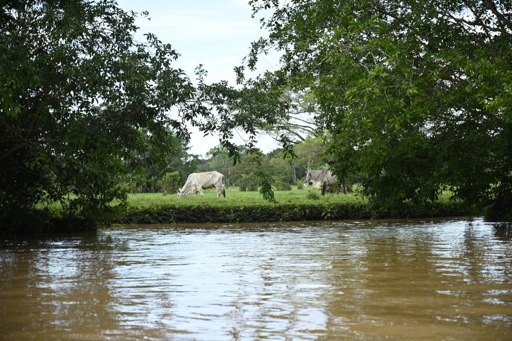
Colombia passed a landmark law June 4 aimed at improving traceability of its cattle supply chain to ensure beef isn’t sourced from deforested land. The law hopes to enhance existing traceability systems and make it easier to identify when cattle have grazed in protected areas and forests that were illegally cleared for pasture. “This is the most powerful tool for determining whether the meat people consume comes from deforested areas,” said representative Juan Carlos Losada, one of the law’s sponsors, in a post on X. About 54% of Colombia’s total land area is covered by forest, that’s roughly 60 million hectares (148 million acres). Deforestation has ebbed and flowed in recent years, declining in 2023, spiking in 2024 and then declining again in 2025. Cattle are always one of the main drivers. The country has over 29.7 million heads of cattle, according to last year’s estimates from the Colombian Federation of Cattle Ranchers. To better regulate the industry, lawmakers tried to pass traceability legislation in 2021 and 2022 but failed to move it through Congress. Another version took too long to reach a final debate in the senate, and expired in 2024. The effort began around the same time that the European Union Deforestation Regulation (EUDR) was passed. Once implemented, the law will require that companies trading with the EU demonstrate their cattle and other commodities weren’t sourced from deforested land. The law allows officials to establish “high surveillance zones” in deforestation hotspots. It includes the ability to implement special…This article was originally published on Mongabay
From Conservation news via This RSS Feed.