

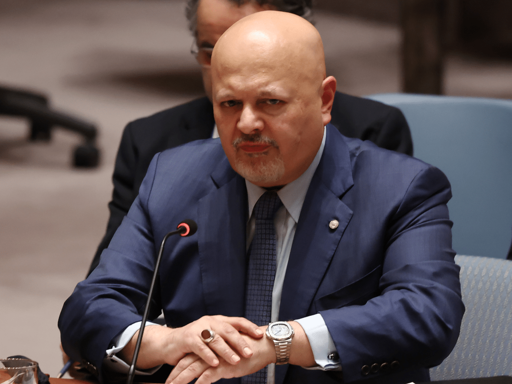
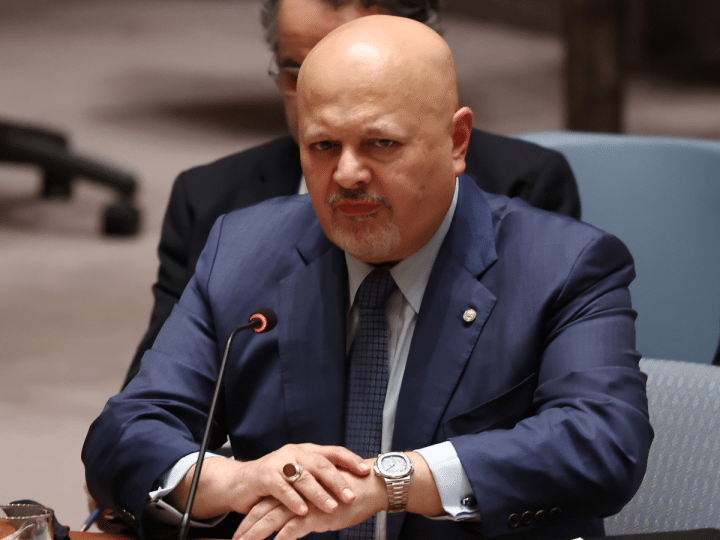
The International Criminal Court’s (ICC) chief prosecutor Karim Khan has been suspended from his duties following an investigation into allegations of sexual misconduct. Khan has now been referred to disciplinary proceedings which will see a vote by all 125 ICC member states, with the upcoming vote set to decide his fate.
However, prior reports regarding the investigation suggested that three judges found that the evidence was not conclusive, despite a UN probe initially finding a “factual basis” for the allegations of sexual misconduct raised by a female aide.
Khan has refuted the allegations levelled against him as a “politically motivated smear campaign,” stating:
The decision is unlawful, procedurally unfair and unsupported by evidence.
As a result, fresh concerns are raised as to why this has now resulted in a member-state vote which could kick Khan out of the ICC.
Moreover, this grows particularly concerning in light of threats and sanctions imposed by Western states towards Khan and the court itself following his decision to issue arrest warrants for genocidal Israeli leaders.
BREAKING: ICC chief prosecutor Karim Khan has been suspended pending a vote by member states after a probe found he committed serious misconduct.
Khan denies the allegations and faces a possible removal vote.
More on https://t.co/5H0QqpfIYw pic.twitter.com/mmSG5phi1t
— Al Jazeera Breaking News (@AJENews) June 8, 2026
ICC: Khan denies any wrongdoing, and evidence is inconclusive
Khan will now face a vote by all 125 member states, but further disciplinary action will require at least 65 states to decide against him. Nevertheless, prior reports surrounding the allegations, which prompted Khan to take a voluntary leave of absence when first raised, suggest that there is not conclusive evidence to prove beyond a reasonable doubt that the claims are valid and legitimate.
Despite that lack of evidence, the bureau – the executive committee of the court’s oversight body – has chosen to refer to a member state vote after making its own decision regarding Khan’s disciplinary proceedings. Frustratingly, the executive committee has not offered an explanation for why it chose to formally suspend Khan, despite reports from Reuters and the Associated Press that a three-judge panel selected to assess the case found that the evidence was not conclusive enough to support the allegations.
However, any faint prospect of understanding the rationale behind such a strong rebuke of the ICC prosecutor will be challenging, given that the Bureau has stated:
The decision of the Bureau and the related documentation will remain confidential.
In contrast, Khan has come under significant pressure, receiving threats and sanctions by leaders of Western states following his principled decision to issue arrest warrants for genocidal Israeli leaders, PM Benjamin Netanyahu and former minister of defence Yoav Gallant. Since charging the pair with war crimes and crimes against humanity seen in Gaza, the ICC and its prosecutor have faced widespread political pressuring to withdraw the warrants.
Defiantly, and in keeping with his stated commitment to upholding international law, Khan has stood by his position and resisted attempts by pro-Zionist governments and political actors in the West to pressure him into silence.
ICC prosecutor Karim Khan remains defiant and set on justice for victims of genocide, as US sustain sanctions on him and his family
By @MaddisonW92 https://t.co/xF9OGt5Hlu
— Canary (@TheCanaryUK) June 3, 2026
Sanctions and threats from Western pro-Zionist leaders
Khan has condemned the decision taken as a politically motivated smear campaign. A majority of 21 diplomats sitting on the executive committee recommended the finding of ‘serious misconduct’ despite three judges finding no real evidence of wrongdoing. Given the lack of evidence and the strong position taken by this executive body, the suggestion of sinister political motivations being at play is hard to discount.
After all, we know that then-foreign secretary David Cameron threatened Khan in an attempt to intimidate him into refraining from issuing arrest warrants, saying that the UK would withdraw from the ICC if he didn’t. Khan did not back down, and we are still a member of the ICC – but resistance to holding Israel accountable for its flagrant war crimes, abuses, and crimes against humanity is still going strong as the UK’s Foreign, Commonwealth and Development Office (FCDO) ‘lost’ all recorded evidence of Israel’s crimes.
Furthermore, and likely relevant to his subsequent character assassination, a British-Israeli lawyer acting on Netanyahu’s behalf reportedly warned Khan in May 2025 that, unless the ICC abandoned the case against the Zionist, genocidal leader, they would “destroy” both the prosecutor and the court itself. Such a warning is surely designed not merely to influence a legal proceeding, but to intimidate the very institution charged with upholding international law.
This state-led intimidation should be illegal
The law rightly treats the intimidation of jurors as a serious offence because it undermines the integrity of the judicial process. In the same way, attempts to pressure or coerce an international court and its officials should bring equal criminality. But that principle only holds if Western leaders are, in practice, prepared to defend the rule of law consistently and without fear or favour.
Nonetheless, this principled, moral leadership certainly won’t come from the US. We wrote recently about Khan’s dogged resistance to the US’ abusive, maligned pressure – which saw unfair, and arguably illegal, sanctions applied against himself and his children by US President Trump:
Khan opened up about the coercive agenda at play to intimidate him as he pursues justice and accountability for the tens of thousands of victims of flagrant war crimes and crimes against humanity.
In response, Khan defiantly centered those who have lost everything as a result of imperialist aggression, saying:
“… it’s not about us. It’s about victims and their right to justice.
They’re not worthless. They’re not numbers. They’re not abstract concepts.
They’re people that have lost their babies, their wives, their husbands, their grandparents.”
Sanctions didn’t work – now they’re weaponising disciplinary processes
Therefore, Khan argues that this may be yet another attempt at intimidation and silencing by the powers he believes dominate the West—Israel and its closely aligned allies in the United States and the United Kingdom.
Regardless of the cynical and potentially subversive agenda that may be driving these actions against him, the member states will ultimately decide any further steps through a vote. International law must matter. Without it, the world risks descending into barbarism, where the most powerful actors remain untouchable and can act with complete impunity. In such a status quo, no one can truly be safe.
Featured image via Getty/Michael M. Santiago
From Canary via This RSS Feed.