

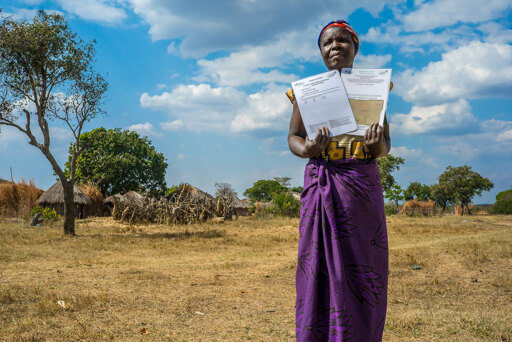
CHIRADZULU, Malawi — In Chiradzulu district in southern Malawi, 60 women who are members of the Rural Women’s Assembly grow fruits and vegetables alongside their staple crop, maize. In recent years, there’s been growing demand for their organically produced crops from buyers in the nearby city of Blantyre, Malawi’s commercial capital. The assembly’s chair in Chiradzulu, Diana Sitima, runs a 3.5-hectare (8.6-acre) organic farm here. She says when she started the farm in 1993, she used to take the produce to consumers in Blantyre. “Now they are coming to us. They say our produce has a good taste,” Sitima says. According to the women, the biggest obstacles they face as farmers is that they lack land titles and capital to invest in their farming. As members of the RWA, these are the issues they discuss at their meetings and bring to their local council and central government for solutions. Ester Samuel spreads maize to dry in Balaka, Malawi. Image by CIMMYT via Flickr (CC BY-NC-SA 2.0) In 1998, not long after she got married, RWA member Lonely Kholowa’s parents gave her a piece of land to cultivate. But after her father passed away in 2009 — her mother had died seven years earlier — her father’s older brother grabbed the land, arguing that according to their culture, she belonged to the family of her mother who came from Machinga district in the east of the country. Today, Kholowa farms land in her husband’s village elsewhere in Chiradzulu. “I don’t have…This article was originally published on Mongabay
From Conservation news via This RSS Feed.