

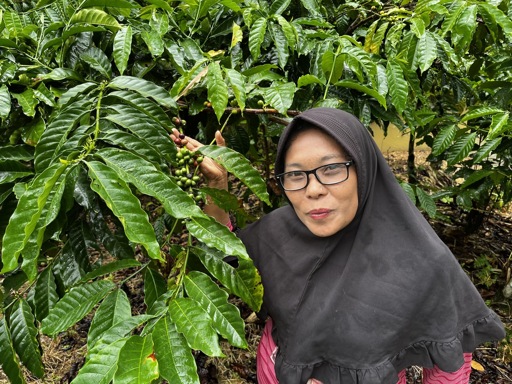
TANGGAMUS, Indonesia — When Sri Atmiatun arrived in the hills of the Batutegi region in southern Sumatra’s Lampung province in 2017, the coffee trees were already there, overgrown and neglected, slowly fading back into scrub. Her uncle had asked her to take over the plot. Sri agreed, trading years of labor on oil palm plantations in the central Sumatran province of Riau. Nearly a decade later, she still walks the same uphill path each morning. Now 45, Sri manages more than 3 hectares (7.4 acres) of land within the 1,400-hectare (3,460-acre) Sumber Makmur social forestry area. Sumber Makmur itself sits on the edge of the more than 80,000-hectare (198,000-acre) Batutegi forest landscape, where some areas are strictly protected while others are managed by communities through agroforestry systems. Under the social forestry program, the land remains state-owned, but local communities like Sri’s are granted the right to manage it for their livelihoods under rules designed to protect the forest and its ecological functions. “I stayed because this land feeds us,” Sri told Mongabay in early March. “If I leave, who will take care of it?” Sri’s story reflects a broader shift. Across the Batutegi landscape, land that was once cleared for coffee is now being restored and managed under Indonesia’s social forestry program. Legal recognition has given farmers access to support and training from the government and private organizations. In return, forest clearing and expansion into protected core areas have been reduced, allowing the forest to remain a safe habitat for…This article was originally published on Mongabay
From Conservation news via This RSS Feed.