

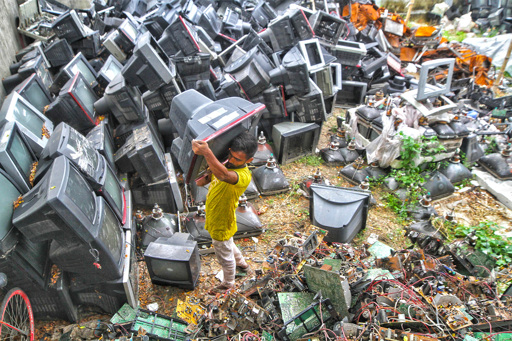
In Bangladesh, poor oversight of unlawful cross-border trade in hazardous electronic waste continues, turning the country into a net importer of electronic waste. The country has rules to control e-waste. It is also a party to the Basel Convention and has introduced its own laws, like the Hazardous Waste (E-waste) Management Rules (2021). However, enforcement of these frameworks remains weak. Mongabay obtained and reviewed the document outlining Bangladesh’s import and export of e-waste, revealing key details on trade flows and regulatory gaps. The document, by the National Board of Revenue (NBR), shows that 40 companies imported e-waste under HS code 8549 — the international customs code for trading e-waste — at various times between 2022 and 2025, in apparent violation of the Basel Convention, an international treaty to reduce the movements of hazardous waste between nations. The textiles and apparel industry leads at 27%, or about one quarter, of all e-waste importers. No response from importers Mongabay reached out to Unilever Bangladesh Limited, one of the 40 e-waste importing companies and the only one that responded. Shamima Akhter, director of corporate affairs, partnerships & communications of Unilever Bangladesh Limited, said in an email on May 21, “We confirm that we have not imported any e‑waste or restricted items. The product concerned is a load cell, which is a precision measuring instrument, and the correct HS Code for this item is 90318, as declared in our import documentation. Any change to HS Code 8549 during the clearance process was made independently…This article was originally published on Mongabay
From Conservation news via This RSS Feed.