

Bullets:
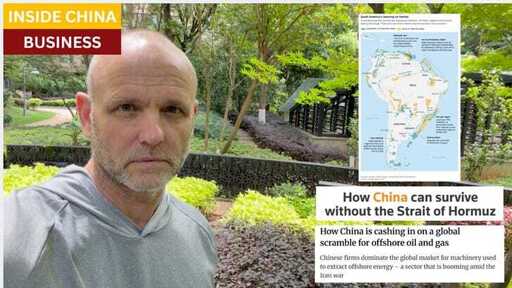
China supplies over half the global market of offshore oil drilling equipment.
Vast new offshore fields are under development in South America and Asia, particularly in countries with close diplomatic and economic ties with China.
The Chinese are better insulated against energy supply chain shocks than other major economies, and surprised experts who issued forecasts to the contrary after American strikes on Venezuela and Iran.
Inside China / Business is a reader-supported publication. To receive new posts and support my work, consider becoming a free or paid subscriber.
In North America, offshore oilfield development is a slow-growth industry, with a CAGR of barely 2%. But in the rest of the world, it is growing at double-digit annual rates.
Report:
Good morning.
This is a recurring theme for us, by now. We get poking around an industry we believe is poised to take off, for some reason, looking for good investments in that theme, only to learn that Chinese companies already control it.
The world is scrambling to find new energy sources, and whether it’s in renewables, or in nuclear. But China is already there, with structural monopolies on the manufacturing of the equipment, and everything in the upstream supply chains.
Same thing happened somehow in the offshore oil and gas equipment industry. Chinese firms build most of the machinery used, and those companies are booming:

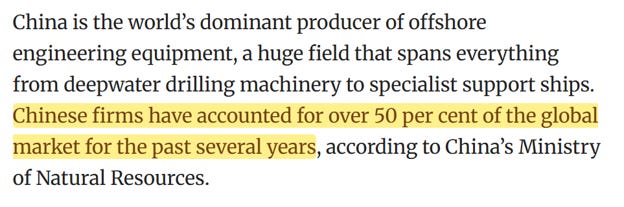
That number—50% of the global market for offshore engineering gear—means that Chinese companies are more than the rest of the world, combined. And this industry is growing fast—doubling over the previous five years–and as we’ll see it’s only going higher.
China has very strong diplomatic and economic ties with South America, and Brazil is a fellow BRICS member. South America’s oil exports are rocketing higher, especially since just one year ago.
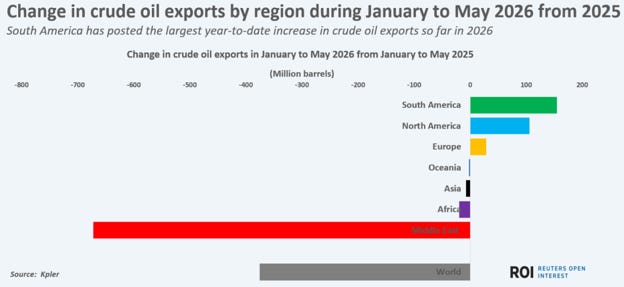
Over the past 10 years, Persian Gulf countries were 43% of all seaborn oil trade. This chart is the difference between the first five months of 2026, compared to the first five months of 2025. 675 million barrels that used to be floated out of the Middle East are gone, because of the closure of the Strait of Hormuz. That’s the red bar. The gray bar at the bottom is the sum total of all deltas of oil exports, and that is still a huge gap. But exports from South America have risen by 155 million barrels. That’s more than the increases from all the other regions combined.
Most of those South American crude exports come from Brazil, which have increased by 150 million barrels per year, since 2021.
And most of Brazil’s exports come here, to China. Oil shipments from Brazil to China more than doubled, year over year—up 122%, to 16 million tons. That’s by volume. Crude oil trade was up 94% in USD terms, even though prices are higher, which suggests that Chinese buyers are getting a discount.
Brazil enjoys immense advantages, especially with the Hormuz closed, and massive new buy orders are pouring in, which has prompted their own oil executives to caution, that Brazil is hitting a ceiling and cannot scale much more new production, at least not quickly.
But Brazil is in a great position and will likely stay there. The country is branding itself as a “safe haven” for oil, targeting importers in China and India:
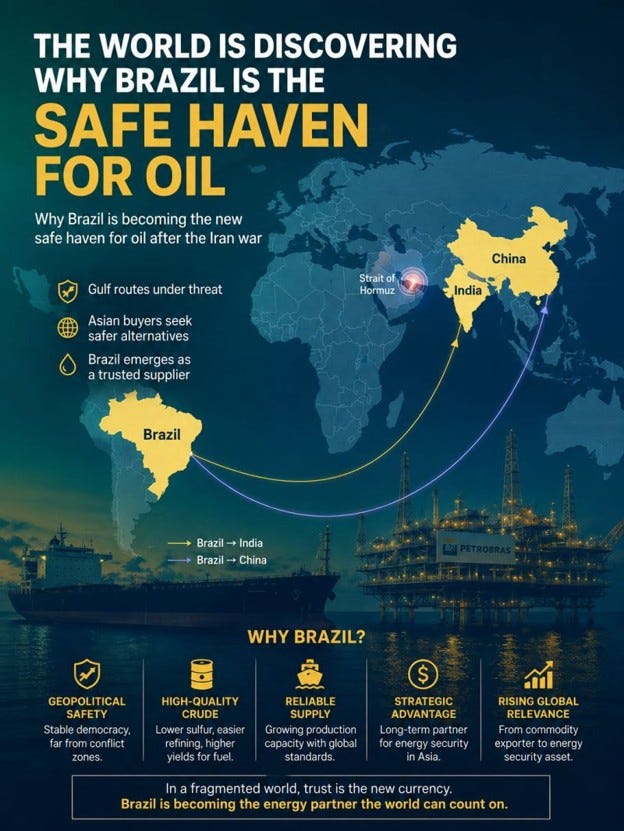
China’s imports of Brazil crude were 10% to start the year, and that also nearly doubled: now it’s 18%. India is Brazil’s second largest customer. Last year India imported less than 100,000 barrels per day from Brazil. Now the number is 290,000 bpd.
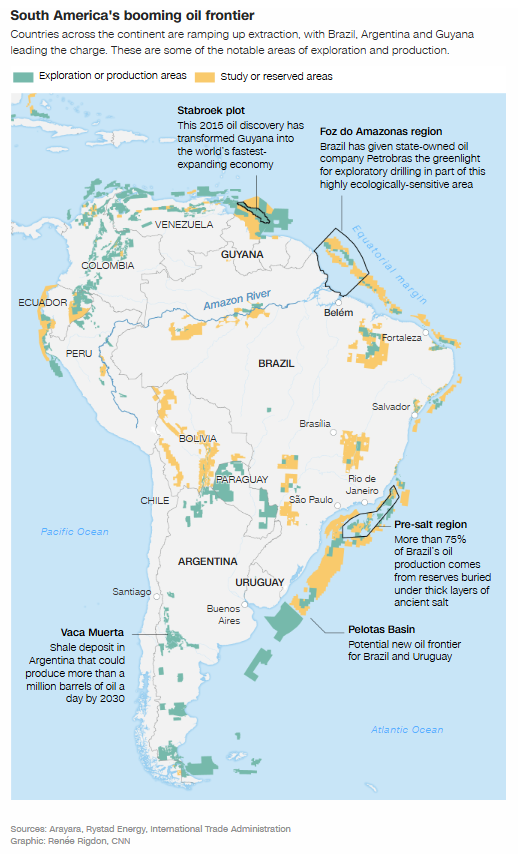
Petrobras is Brazil’s state-owned energy company, and by far the biggest in-country. And most of Brazil’s new oilfield discoveries are offshore, clustered near the mouth of the Amazon river. That means a boom in jobs, now at a 16-year high, along with tens of billions of dollars in new investment.
There are lots of headlines about Brazil’s soybean industry putting the American farmers out of business, but oil an even bigger export market for Brazil, and China is an even bigger buyer of crude than soybeans. And China builds more of that equipment for the oil industry than the rest of the world, combined.
Referring again to that map, “offshore” is obviously everything in the Atlantic and Pacific Oceans, but offshore oil drilling equipment is also necessary for most of those fields in the Amazon basin upriver. But it is the deepwater sources specifically which are high production at low cost, after that equipment is deployed and pumping.
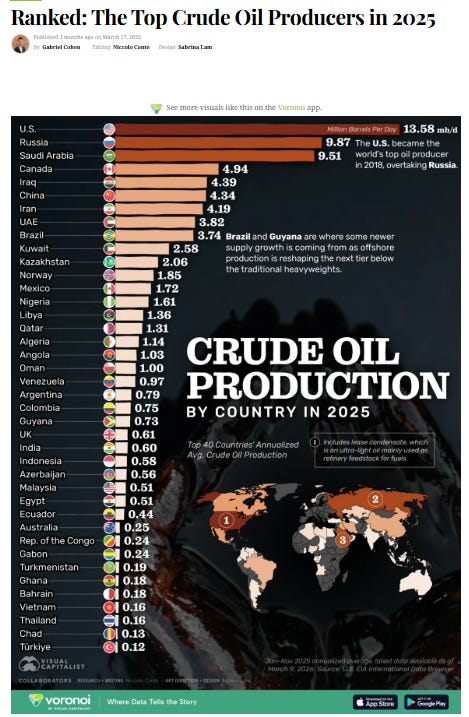
China has a large industry for oilfield equipment, because it is one of the world top oil and energy producers. In 2024 China ranked #6 in the world for crude oil production, just ahead of Iran, and Brazil. Brazil and Guyana are major sources of the new growth in crude oil supplies.
And when we add in petroleum liquids, China ranks fifth in the world. Energy independence is a strategic priority, set at the highest levels, and production hits records every year.
In the most recent five-year plan that concluded last year, annual investment was 48% higher than during the previous five years, and now that new production is coming online.
Today, domestic crude production is 4.3 million barrels per day, and the Bohai Gulf and South China Sea offshore production accounted for more than half of the new production since 2020. There are plans for new fields off the mouth of the Pearl River. What’s more, foreign oil companies have been “quietly” denied access to all the new Chinese energy fields.
Many political analysts, and some energy industry insiders, made some forecasts during the first few months of the year, which have not panned out, at all. Many believed that China would be crippled by the loss of their Venezuelan suppliers, then wiped out by the war on Iran. But some tankers outbound Iran are still making it this way, anyhow, and China is far better insulated from energy supply shocks than anyone thought.
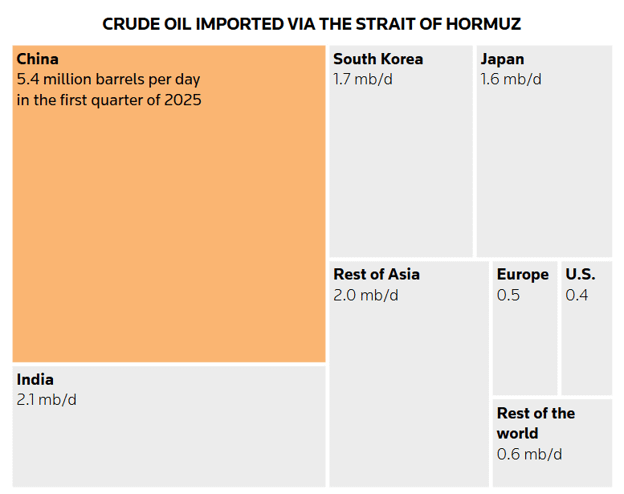
China previously imported more oil from the Persian Gulf than India, Japan, and South Korea combined, but policymakers in those countries have enacted rationing and austerity measures. China is telling people that the “energy rice bowl” is in their own hands: so handle with care; don’t waste it, but don’t worry about it.
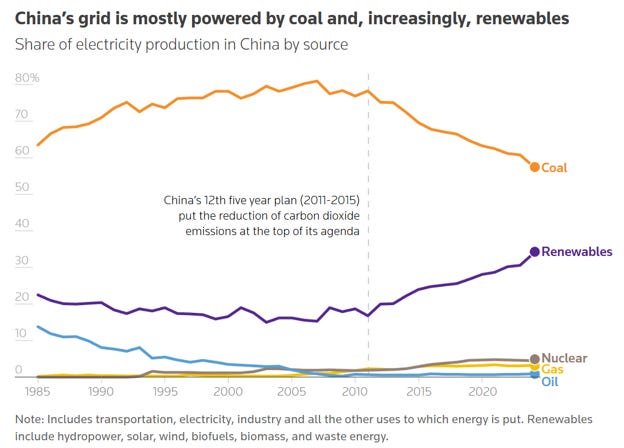
China has as many electric vehicles as the rest of the world combined, they have a diversified energy mix, and vast coal reserves plus renewables mean that China’s electric grid is powered mostly by domestic sources.
The situation is almost exactly what their central planners had in mind, over many years, to “reduce their reliance on imported and seaborne fossil fuels.” Six years ago, Beijing set a goal for 20% electric vehicle sales by 2025. But the final 2025 sales result was over half. That unexpected boom means a far larger, and far earlier than expected impact on Chinese oil imports:
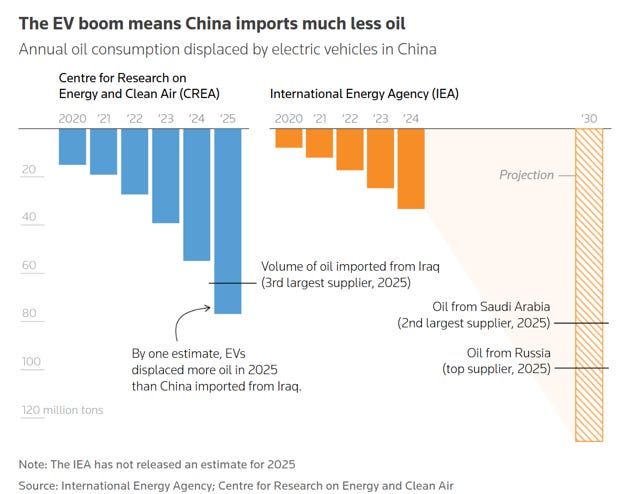
The oil demand that was displaced by EV sales canceled out what China used to buy from Saudi Arabia. Going out to 2030, EV sales will displace oil demand from Saudi, and Russia. So, oil demand in China is peaking and in decline, and the situation is unlikely to get worse, no matter what happens in the Persian Gulf, or in Venezuela, or in Russia. The electric grid is less dependent on oil than ever: now flatlining, at barely above zero:
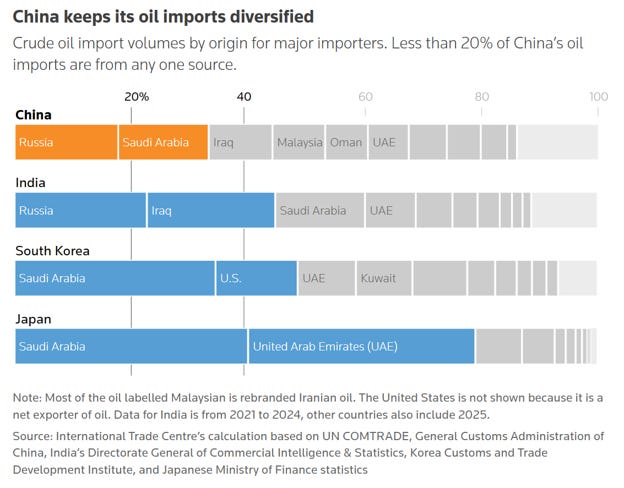
And China also has a deeper diversification of crude oil suppliers, compared to other Asian countries. Less than 20% of China’s imports come from a single source, and their number one supplier is Russia, who is also better insulated than anyone to disruptions in seaborne oil transport:
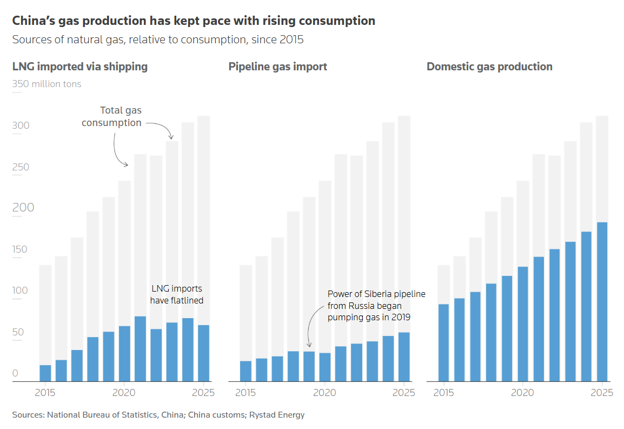
Gas is a higher share of China’s electricity mix than oil, and that percentage is growing, though it’s harder to tell given the boom in renewables. Electricity production is booming, along with consumption, but domestic supplies of gas are keeping pace with the rise in demand, and they are also hauling in record volumes through Russian pipelines:
There are American companies that also build offshore oil equipment. But they’ve got a bunch of problems. The offshore equipment market is a low-growth industry, for US firms. The compound annual growth rate in North America is barely over 2%. Investors can make more than twice that buying US Treasury bonds.
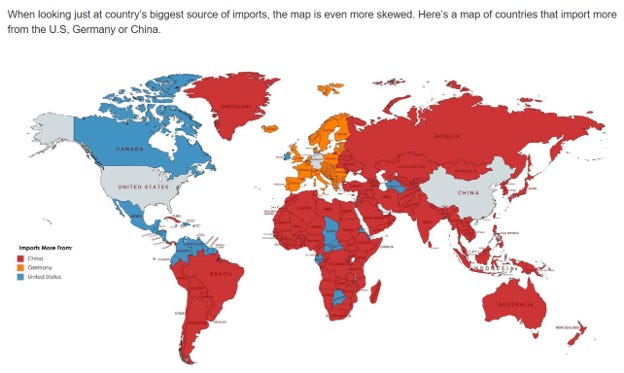
Chinese companies are now over half the world’s market share for this equipment, and we should assume that the Chinese are building high-quality gear at competitive prices, and doing so in countries that are more friendly with China, than with the United States. And doing so in countries who strongly prefer NOT to use US dollars or US banks to finance the purchases. And, in countries who hope to be one of China’s energy suppliers after production comes online.
Be good.
Resources and links:
Brazil, Guyana, Venezuela Fuel South America’s Oil Export Boom
https://finance.yahoo.com/sectors/energy/articles/brazil-guyana-venezuela-fuel-south-230000460.html
Brazil’s offshore oil and gas plans contradict COP30 climate ambitions
https://globalwitness.org/en/campaigns/fossil-fuels/brazils-offshore-oil-and-gas-plans-contradict-cop30-climate-ambitions
Brazilian Oil Jobs Are at 16-Year High on Offshore Drilling Boom
https://www.bloomberg.com/news/articles/2026-05-14/brazilian-oil-jobs-are-at-16-year-high-on-offshore-drilling-boom
How China is cashing in on a global scramble for offshore oil and gas
https://www.scmp.com/economy/china-economy/article/3356113/how-china-cashing-global-scramble-offshore-oil-and-gas
China’s largest offshore oil production base, Bohai Oilfield, sees 2025 output exceed 40 million tons
https://www.globaltimes.cn/page/202512/1351112.shtml
China’s Oil Pumping Power Breaks All Records
https://oilprice.com/Energy/Energy-General/Chinas-Oil-Pumping-Power-Breaks-All-Records.html
China’s CNOOC commences new offshore oil project in the South China Sea
https://www.reuters.com/sustainability/boards-policy-regulation/chinas-cnooc-commences-new-offshore-oil-project-south-china-sea-2025-12-22/
China’s record oil output reaches limits of what’s possible
https://www.reuters.com/business/energy/chinas-record-oil-output-reaches-limits-whats-possible-2026-03-20/
X, Arnaud Bertrand
China added more crude to its massive stockpile in March, but outlook shifts
https://www.reuters.com/markets/commodities/china-added-more-crude-its-massive-stockpile-march-outlook-shifts-2026-04-16/
How China can survive without the Strait of Hormuz
https://www.reuters.com/graphics/IRAN-CRISIS/CHINA-OIL/egpbeormkvq/
Watch China Overtake The US As The World’s Major Trading Partner
https://merchantmachine.co.uk/china-vs-us/
REPORT China EV market situation in first half of 2025
https://carnewschina.com/2025/07/21/report-china-ev-market-situation-in-first-half-of-2025/
Electricity per person, nearly entire global growth coming from China
https://www.reddit.com/r/EconomyCharts/comments/1pm63md/electricity/_per/_person/_nearly/_entire/_global/
The BRICS Map: Who’s In? Who’s Engaged?
https://bricslab.mit.edu/bricsresearch/brics-map/
China dominates all stages of solar panel production
https://www.statista.com/chart/24687/solar-panel-global-market-shares-by-production-steps
China is world leader in wind energy
https://www.voronoiapp.com/energy/China-Is-The-World-Leader-in-Wind-Energy--1825
Nuclear plants under construction, by country
https://www.globaltimes.cn/page/202601/1352332.shtml
Offshore Drilling Equipment Market
https://www.marketresearchfuture.com/reports/offshore-drilling-equipment-market-41587
Ranked: The Top Crude Oil Producers in 2025
https://www.visualcapitalist.com/ranked-worlds-biggest-producers-of-crude-oil/
The World’s Largest Oil Producers
https://www.statista.com/
South America’s stealthy ascent to key crude oil swing supplier
https://www.hydrocarbonprocessing.com/news/2026/06/south-americas-stealthy-ascent-to-key-crude-oil-swing-supplier/
Inside China / Business is a reader-supported publication. To receive new posts and support my work, consider becoming a free or paid subscriber.
From Inside China / Business via This RSS Feed.