

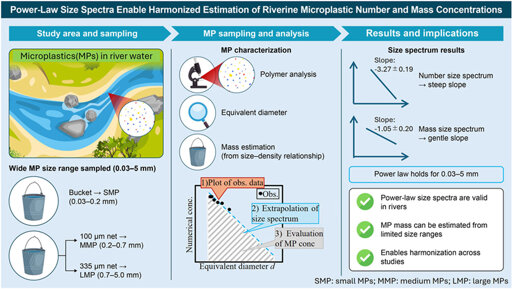
Microplastics (MPs), defined as plastic fragments smaller than 5 mm, have become so pervasive that they are detectable in nearly every environment studied—from remote ocean trenches to urban air, tap water, and human blood. MPs are hardly uniform; they span an enormous size range. Larger fragments are visible to the naked eye, while the smallest ones have a diameter of a few micrometers. These variations in size are important, as smaller particles are far more numerous, behave differently in water than larger particles, and may pose greater risks to aquatic organisms and human health.
From Earth News - Earth Science News, Earth Science, Climate Change via This RSS Feed.
You must log in or # to comment.