

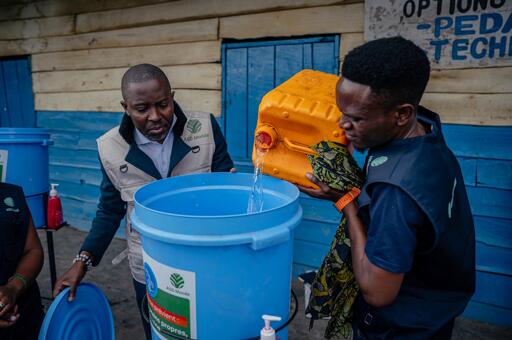
KAMPALA — In the hills and trading centers of western Uganda, bordering the Democratic Republic of Congo, authorities are racing to limit the spread of Bundibugyo ebolavirus, a rare species of Ebola for which there is currently no vaccine or cure. The number of suspected cases in the DRC is fast approaching 1,000, with Uganda reporting seven cases, as of May 25. The first cluster of cases of the ongoing outbreak was detected in early May in Ituri province in the DRC, which shares a border with Uganda. The close community and economic ties between people residing on both sides of the border has complicated efforts to contain the outbreak, with Uganda taking measures to stem the flow of people. The Ebola virus driving the current outbreak is named for Uganda’s Bundibugyo district, where it was first detected almost two decades ago. (International health bodies including the World Health Organization have since moved away from naming disease-causing pathogens after places, citing stigmatization.) Most Ebola outbreaks to date have been caused by the Zaire ebolavirus, which also drove the 2014-2016 epidemic centered on West Africa. The Bundibugyo ebolavirus has been linked to two outbreaks in the past. The second outbreak emerged in the DRC in 2012 remained limited to the country, before subsiding later that year. This time may be different, since cases have emerged in Uganda, and the risk of regional spread is high. On May 23, the Africa Centres for Disease Control and Prevention (Africa CDC) identified 10 other…This article was originally published on Mongabay
From Conservation news via This RSS Feed.