

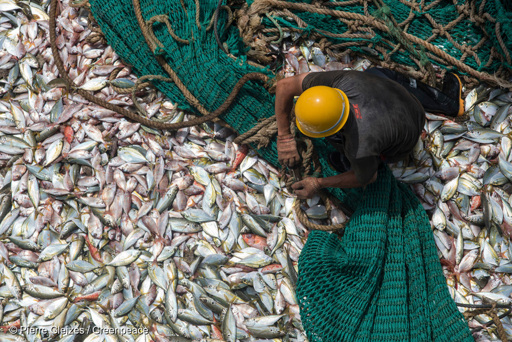
The deaths of migrant fishers at sea are largely driven by structural labor and governance failures, rather than by safety or compliance issues alone, a new study shows. Migrant sea workers, especially those recruited from low-wage Southeast Asian countries such as Indonesia, often experience violence and fatal abuse while aboard distant-water fishing vessels, those that operate in the seas outside any one country’s jurisdiction. The study, published Jan. 27 in the journal Maritime Studies, found that deaths of migrant fishers at sea are frequently the result of systemic working conditions that give boat captains control over basic living and survival conditions, making fatalities a predictable outcome rather than isolated incidents. “In seeking a conceptual framework to analyse these deaths at sea, we employed necropolitics, as it captures how power operates through death and the threat of death as instruments of governance,” lead author Christina Stringer, director of the Centre for Research on Modern Slavery at the University of Auckland Business School, Aotearoa New Zealand, told Mongabay by email. Indonesian migrants on board foreign fishing boats describe experiencing overwork, withholding of wages, debt bondage, and even physical and sexual violence. Image courtesy of Greenpeace. The paper is based on systematic analysis of 55 documented cases of Indonesian fishers who died or went missing on distant-water fishing vessels owned by or operating under the flags of China, Taiwan and South Korea. Using the idea of “necropolitics,” which refers to the power to decide who lives and who dies, the authors found that…This article was originally published on Mongabay
From Conservation news via This RSS Feed.